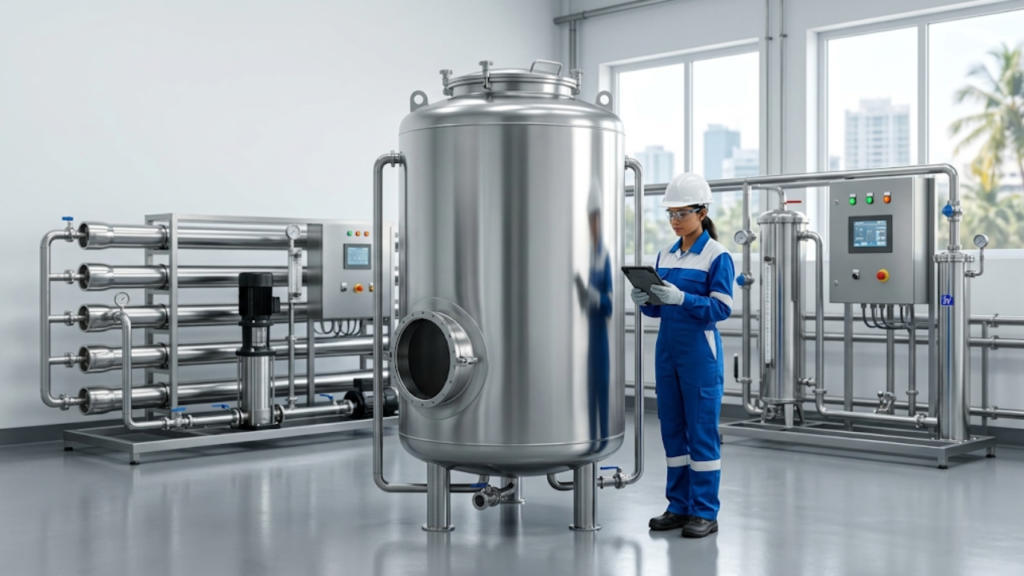
The Tank You Cannot See Is the One That Matters Most
Most people who invest in a water purification system – whether a domestic RO unit in a Koramangala flat, a community RO water plant for an apartment complex, or an industrial RO system for a Nelamangala factory – spend their attention and their money on the visible components. The RO membrane. The UV lamp. The TDS display. The dispenser point that workers or residents use every day.
The storage tank sits behind a door, in a utility room, on the rooftop, or underground. It is invisible in daily operation. No one checks it at quarterly maintenance visits unless they specifically know to ask. And in hundreds of Bangalore homes, restaurants, hospitals, and apartment complexes, this invisible component is quietly undermining the quality of water that the visible, expensive components worked so hard to purify.
Plastic HDPE tanks – the cheapest and most common water storage option across Bengaluru – develop microscopic internal surface cracks within 2–5 years of service. These cracks are invisible to the eye. But they are not invisible to bacteria. Biofilm colonies – bacteria embedded in a self-protective polysaccharide matrix – colonise these crack surfaces, where they are protected from routine cleaning and from UV irradiation. Water stored overnight in a biofilm-contaminated plastic tank is being recontaminated after purification. The RO membrane removed 99%+ of bacteria. The UV lamp delivered its 30 mJ/cm² germicidal dose. And then the purified water sat for 8 hours in a tank that introduced bacteria back into it.
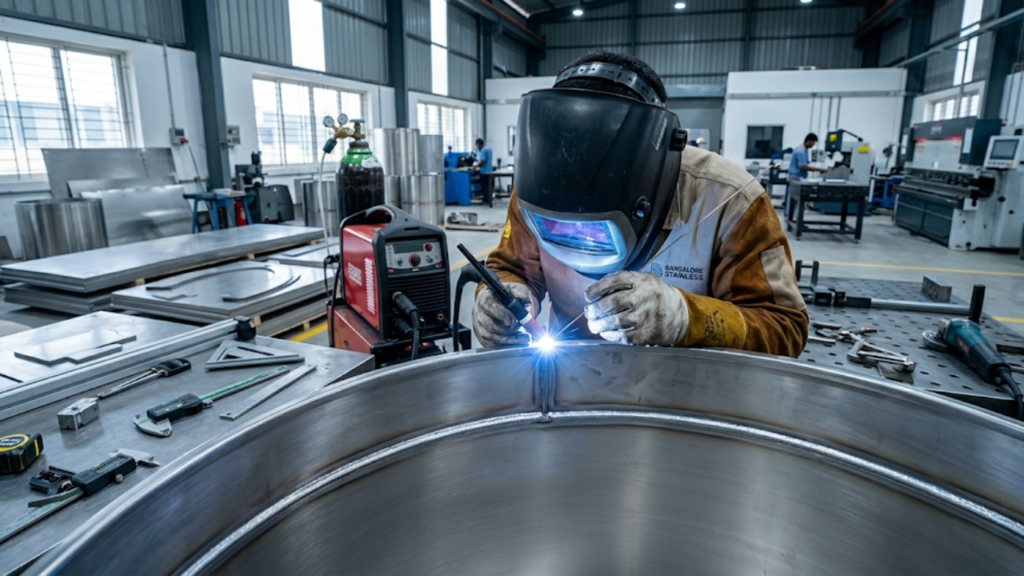
<cite index=”26-1″>Stainless steel tanks are manufactured with laser welding that produces very precise seamless joints that seal against leakage and optimise overall strength. The clean internal surfaces that result from laser welding, combined with the inherent properties of SS304 and SS316 grades, eliminate the micro-crack and biofilm formation issues that affect plastic storage tanks over time.</cite>
A stainless steel water tank from Bangalore Aqua – in food-grade SS304 or pharmaceutical-grade SS316 – does not crack internally. It does not support biofilm in the way that degraded plastic does. It is easy to visually inspect and mechanically clean. It lasts 20–30 years without structural degradation. And for every litre of water that a high-quality purification system produces, the SS tank ensures that what reaches the end user is still the pure water the purification system produced – not something that sat in a contaminated plastic vessel overnight.
This guide is the complete resource for every Bangalore buyer of stainless steel water storage tanks – for domestic homes, apartment buildings, RO plant storage, hotels, hospitals, restaurants, community water plants, and industrial facilities.
Why Stainless Steel Tanks Are the Right Choice for Bangalore’s Water Storage
The case for stainless steel over plastic, cement, or mild steel tanks is compelling on every dimension that matters for long-term water quality and structural reliability.
The Plastic Tank Problem
HDPE (High-Density Polyethylene) water tanks – marketed under brand names like Sintex – dominate the Indian residential and commercial market because of their low upfront cost. A 500-litre HDPE tank costs ₹1,500–₹3,000 versus ₹18,000–₹35,000 for an equivalent SS304 stainless steel tank.
That price difference is real. But so are the plastic tank’s limitations over time:
Internal surface degradation: HDPE develops micro-cracks on its internal surface after 3–7 years of service – particularly when the tank undergoes repeated thermal cycling (warming during day, cooling at night) or when stored water contains any mineral scale content (which Bangalore borewell water invariably does). These micro-cracks are the attachment points for biofilm formation.
UV degradation: Even with UV stabilisers, external-facing plastic tanks degrade in Bangalore’s intense solar exposure – becoming brittle and prone to cracking at mechanical stress points (inlet fittings, lid seams).
Taste and odour leaching: Degraded plastic surfaces can contribute taste and odour compounds to stored water – particularly noticeable in water with moderate TDS that has been stored for more than 12 hours.
Inability to effectively sanitise: Once biofilm is established in plastic tank micro-cracks, standard chlorine sanitation at normal doses cannot penetrate the biofilm matrix. Only very high chlorine concentrations (which damage the plastic further) or physical scrubbing can address established biofilm.
Black tank algal growth: Black HDPE tanks block light penetration, preventing photosynthetic algae growth in the tank – but they do not prevent the heterotrophic bacteria that colonise biofilm regardless of light availability.
The Concrete Tank Problem
Cement sump tanks – standard in older Bangalore buildings – share many plastic tanks’ limitations and add their own:
- Cement surface porosity provides ideal biofilm attachment surface
- Curing compounds and cement alkalinity can leach into stored water, raising pH and contributing suspended calcium particles
- Concrete tanks cannot be effectively cleaned internally – access is limited and surface porosity traps cleaning agents
- Cracking and structural degradation over decades is progressive and difficult to detect or repair
The Mild Steel Tank Problem
Galvanised iron or mild steel tanks corrode when the zinc galvanising layer is damaged or depleted – which in Bangalore’s hard, slightly acidic borewell water, occurs within 5–10 years. Rust from mild steel tanks contaminates stored water with iron, orange discolouration, and structural particles that clog downstream filters.
Why Stainless Steel Is Different
<cite index=”26-2″>High-strength grades of stainless steel like SS304 and SS316 are world-famous for rust-resistance and food-grade quality. The material grades are selected to offer long-term performance even in outdoor or corrosive environments, guaranteeing water purity while extending tank life.</cite>
Stainless steel water tanks provide:
Genuine non-corrosive performance: The chromium content in stainless steel (18% in SS304) forms a self-repairing passive oxide layer on the surface that prevents corrosion even when the surface is scratched. This passivation layer reforms spontaneously on exposure to oxygen – meaning stainless steel tanks maintain their anti-corrosion properties throughout their service life without any maintenance intervention.
Smooth, non-porous internal surface: The internal surface of a properly fabricated SS tank – particularly one with a brushed or mirror-polished finish – has no porosity, no micro-cracks, and no surface texture that biofilm can anchor to. The surface is physically and chemically inhospitable to bacterial adhesion.
Easy cleaning and inspection: The smooth internal surface allows visual inspection (with a torch, any deposit or discolouration is immediately visible) and effective mechanical cleaning (wiping with a cloth removes virtually all deposits). Annual sanitisation with food-grade cleaning agents – possible only when the tank interior can actually be accessed and cleaned – restores the tank to hygienic condition.
Long service life: A properly fabricated SS304 tank in typical Bangalore conditions has a service life of 20–30+ years. The 10–15× higher upfront cost relative to plastic typically translates to 4–6× lower lifetime cost when amortised over the tank’s actual operational period.
Structural reliability: Stainless steel tanks maintain their structural integrity against Bangalore’s combination of thermal cycling, seismic risk (Bangalore is in seismic zone II), and the occasional construction activity that causes vibration in adjacent structures.
Understanding SS Grades: Which Stainless Steel for Your Application?
The stainless steel market in Bangalore includes tanks in SS202, SS304, SS304L, SS316, and SS316L grades – and making the wrong grade choice means either overpaying for properties you do not need or under-specifying for an application that demands more corrosion resistance.
<cite index=”28-1″>Stainless steel water tanks are available in SS304, SS316, and SS202 variants – each offering different levels of corrosion resistance, durability, and application suitability. Grades are selected based on the application’s exposure to corrosive environments and regulatory requirements.</cite>
SS202 – The Budget Grade (Not Recommended for Water Storage)
SS202 substitutes manganese and nitrogen for some of the nickel content of SS304, reducing cost. It has adequate corrosion resistance in mild environments but is significantly more susceptible to pitting corrosion in chloride-containing environments – which describes virtually all Bangalore borewell water.
Bangalore Aqua’s position on SS202: We do not supply SS202 tanks for potable water storage or RO plant storage. The cost saving relative to SS304 is modest; the corrosion risk in Bangalore’s chloride-bearing groundwater is real. For non-potable uses (non-drinking industrial water storage, external applications with no water quality requirement), SS202 may be acceptable, but Bangalore Aqua’s standard for any water storage application is SS304 minimum.
SS304 – The Food-Grade Standard for Water Storage
SS304 (also called 18/8 stainless steel – 18% chromium, 8% nickel) is the global standard for food-grade and water-contact applications. It is the specification mandated by Indian standards for food processing equipment and food-contact surfaces.
Corrosion resistance: Excellent in atmospheric, water, and most food environments. Resists pitting from borewell water with chloride content below approximately 200 mg/L – which covers most Bangalore borewell sources.
Applications in Bangalore:
- Domestic and apartment purified water storage
- RO plant permeate storage tanks (for domestic, commercial, and community plants)
- Hospital drinking water and general utility storage
- Hotel and restaurant kitchen water storage
- Community water plant storage
- Food and beverage manufacturing water storage
Certification: SS304 tanks from verified fabricators comply with IS 1513:2002 (stainless steel water containers), IS 14900 (food-grade stainless steel), and FSSAI food safety material requirements for food-contact applications.
Bangalore Aqua specifies SS304 as the standard grade for all community RO water plant storage and all commercial water treatment storage applications. See their stainless steel water tank product page for standard capacity options.
SS304L – Low Carbon SS304 (For Welded Construction)
SS304L is chemically identical to SS304 but with a lower carbon content (0.03% vs 0.08% maximum). The lower carbon prevents carbide precipitation in the heat-affected zone of welds – a phenomenon called sensitisation that can reduce corrosion resistance at weld joints in standard SS304.
When to specify SS304L: For large, heavily welded tanks where multiple weld passes create significant heat exposure. For most standard water storage tank applications with limited welding, standard SS304 is adequate.
Price: Typically 3–5% premium over SS304 in Bangalore market.
SS316 – Superior Corrosion Resistance, Pharmaceutical and Coastal Standard
SS316 adds 2–3% molybdenum to the SS304 formula. Molybdenum dramatically improves resistance to pitting corrosion in chloride environments – making SS316 the preferred grade for coastal applications, pharmaceutical/GMP water systems, and any application where chloride levels are elevated.
<cite index=”34-1″>SS316 grade stainless steel provides superior corrosion resistance due to its molybdenum content, which is especially important in environments with elevated chloride concentrations. It is the preferred grade for pharmaceutical water systems, coastal environments, and chemical storage where SS304 might show accelerated pitting.</cite>
See Bangalore Aqua’s dedicated blog on does 316 stainless steel rust with RO water for a detailed technical analysis of SS316’s performance in purified water environments.
When to specify SS316 in Bangalore:
- Hospital water treatment – dialysis water, pharmaceutical water, clinical applications
- Pharmaceutical manufacturing facilities in Bommasandra, Peenya, and Doddaballapur
- Properties with very high borewell chloride content (above 200 mg/L)
- Food processing applications where the tank is cleaned with aggressive acid or chlorinated cleaning agents
- Coastal Karnataka locations (Mangaluru, Udupi, coastal Uttara Kannada) where airborne salt spray creates a corrosive atmosphere
Price premium vs SS304: SS316 typically costs 25–40% more than equivalent SS304 in Bangalore – reflecting the higher alloy content.
SS316L – Pharmaceutical-Grade (GMP Standard)
SS316L combines SS316’s superior corrosion resistance with the low-carbon benefit of the “L” designation – essential for heavily welded pharmaceutical and biotech applications.
When to specify SS316L:
- Water For Injection (WFI) storage – GMP-mandated pharmaceutical grade
- API (Active Pharmaceutical Ingredient) manufacturing facility water systems
- Biotech and research laboratory ultrapure water systems
- Any application governed by CDSCO GMP guidelines or international pharmacopoeias (USP, EP, IP)
Finish specification for pharmaceutical applications: SS316L tanks for pharmaceutical use are specified with an electropolished (EP) internal finish – a controlled electrochemical process that removes surface peaks and creates an ultra-smooth finish with Ra (roughness average) below 0.5 μm. Electropolishing further reduces bacterial adhesion potential and facilitates sterilisation-in-place (SIP) procedures.
Types of Stainless Steel Water Storage Tanks
By Orientation
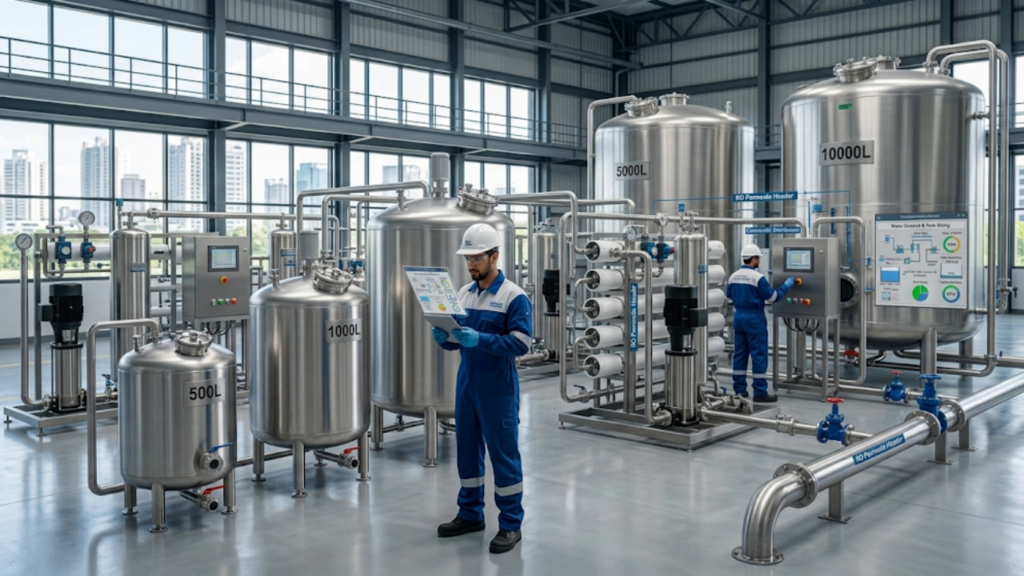
Vertical cylindrical tanks: The most common configuration for water storage. Vertical orientation maximises storage volume per footprint, minimises the surface area-to-volume ratio (reducing heat exchange with the environment and minimising exposed surface). Available from 100 litres to 50,000 litres in custom fabrication.
Horizontal cylindrical tanks: Used where headroom is limited – under-counter or under-bench installations in commercial kitchens, compact utility spaces, or where tank installation on a floor rather than overhead is preferred. Also used for process storage where gravity drain-down is needed.
Rectangular / square tanks: Custom fabricated to fit specific space constraints – under-stair spaces, rooftop enclosures with fixed dimensions, or locations where cylindrical tanks cannot be positioned. Structurally less efficient than cylindrical tanks (rectangular shapes carry pressure less efficiently) but more space-utilisation efficient in square enclosures.
By Installation Position
Overhead tanks (rooftop or elevated): The most common configuration for residential and commercial buildings – gravity-fed water distribution from an elevated tank requires no pump in the distribution system (only the supply pump to fill the tank from below). Standard for apartment overhead tanks serving domestic plumbing.
Underground sump tanks: Large capacity storage below ground level – appropriate for buildings’ main water supply buffer before being pumped to overhead tanks. SS tanks used as underground sumps should have appropriate corrosion protection on the external surface to manage soil contact.
Floor-mounted process tanks: For industrial RO plants and community water plants, permeate storage tanks are typically floor-mounted – fed by gravity from the RO system and distributed by a booster pump to the point of use.
Pressurised storage vessels: For applications where water must be delivered at positive pressure without a distribution pump – typically in pressurised point-of-use dispensing systems. Designed to ASME or equivalent pressure vessel standards.
By Application-Specific Design
RO permeate storage tanks: Designed specifically for post-RO purified water storage. Critical features: food-grade SS304 minimum, fully enclosed with airtight lid (prevents recontamination from airborne bacteria), bottom drain for complete cleanout, inlet positioned at tank top (maintains aerobic conditions), overflow connection, and a visual level indicator or float-operated level switch for pump control.
Hospital loft tanks: Designed for hospital overhead water storage with features matching infection control requirements – airtight construction, inspection port with gasketed access cover, SS304 construction minimum, interior surface accessible for annual sanitisation, documented thickness certification.
Solar thermal storage tanks: Insulated SS tanks for solar water heater storage – typically SS304 with 50–100mm polyurethane foam insulation bonded to the external surface, designed for temperatures up to 90°C.
Capacity Sizing Guide for Bangalore Applications
Choosing the right tank capacity is the most important design decision before purchasing. An undersized tank creates supply gaps during peak demand. An oversized tank means water stagnates before it is consumed – a water quality concern for potable water systems where the daily turnover rate matters.
Domestic and Apartment Applications
For individual flats (2–3 BHK, family of 3–5):
- Drinking and cooking water storage from domestic RO: 10–25 litres per day consumption
- Recommended tank size: 20–50 litres (provides 1–2 days’ buffer)
- Standard product: Bangalore Aqua’s 100-litre RO water cooler combines SS storage with cooling function
For apartment building overhead tanks (main domestic supply):
- Calculate: 135 litres per person per day (CPHEEO standard for urban water supply) × number of residents
- For a 100-flat building with average 3 residents per flat: 135 × 300 = 40,500 litres per day
- Recommended tank capacity: 40,000–60,000 litres (1–1.5 days’ buffer)
- Typically split across multiple tanks rather than one very large unit for practical fabrication and maintenance
Commercial Applications
Restaurant (50–100 covers):
- Kitchen water consumption (cooking + dishwashing + equipment): 200–500 litres per service
- Drinking water for staff and customers: 50–150 litres per day
- Recommended storage: 500–1,000 litres
Hotel (50–100 rooms):
- Total daily water consumption: 250–500 litres per occupied room
- Storage buffer required: 30–50% of daily consumption (6–12 hours)
- Recommended storage: 10,000–25,000 litres (across multiple tank positions)
Corporate office (200–500 employees):
- Drinking water: 3–5 litres per employee per day = 600–2,500 litres per day
- Recommended drinking water storage: 500–1,000 litres (connected to commercial RO plant)
RO Plant Permeate Storage
For any RO water treatment system, the purified water (permeate) storage tank is sized to buffer between production and demand:
| Plant Capacity | Recommended Storage | Rationale |
| 100 LPH domestic | 100–250 litres | 1–2.5 hours of production |
| 250 LPH light commercial | 250–500 litres | 1–2 hours of production |
| 500 LPH commercial | 500–1,000 litres | 1–2 hours of production |
| 1,000 LPH community | 2,000–5,000 litres | 2–5 hours of production |
| 2,000 LPH large community | 5,000–10,000 litres | 2.5–5 hours of production |
| 5,000 LPH industrial | 10,000–25,000 litres | 2–5 hours of production |
The general principle: store enough purified water to cover demand during a 4–8 hour plant maintenance window (membrane cleaning, cartridge replacement) without supply interruption to users.
For Bangalore’s community and industrial RO plant applications, Bangalore Aqua’s community RO water plant packages always include appropriately sized SS304 permeate storage tanks as a standard component – not an optional add-on.
Construction Standards: What to Look for in an SS Tank
Not all SS tanks in Bangalore are manufactured to the same quality. Here is what separates a high-quality SS tank from a commodity product that will disappoint within 5 years.
Welding Quality – The Most Critical Construction Variable
<cite index=”26-3″>Laser welded joints produce very precise seamless seals that are leak-proof and optimise overall structural strength. Removing mechanical fastening requirements also reduces design vulnerability points that could develop corrosion or leakage over time.</cite>
For water storage tanks, the weld quality determines both water tightness and corrosion behaviour:
TIG welding (Tungsten Inert Gas): The standard welding process for food-grade and pharmaceutical SS tanks. The TIG process uses an inert argon gas shield to prevent atmospheric oxygen contamination of the weld pool, producing a clean, low-oxide weld bead. Internal TIG welds should be ground smooth and polished to eliminate crevices that could trap water or support biofilm.
MIG welding: Faster and cheaper than TIG but produces a rougher weld bead with more oxide contamination. Not appropriate for food-grade water contact surfaces.
Laser welding: The most precise welding technology – uses a focused laser beam to produce ultra-narrow, ultra-clean weld joints. Increasingly used in high-volume tank production lines. Produces excellent joint quality and very smooth weld profiles.
What to check: Ask your SS tank supplier to show you the internal surface of a weld joint. A food-grade tank should have welds that are visibly smooth, with minimal surface oxide or grinding marks. Rough, oxidised weld beads that have not been properly finished indicate lower quality fabrication.
Sheet Gauge (Thickness)
Tank wall thickness directly determines structural integrity, service life, and resistance to denting during handling and installation. Standard specification for water storage tanks:
| Tank Capacity | Recommended Minimum Sheet Gauge | Standard Specification |
| Up to 500 litres | 1.2 mm (16 SWG) | Adequate for most domestic/light commercial |
| 500–2,000 litres | 1.5–2.0 mm (14 SWG) | Standard commercial – resists handling dents |
| 2,000–5,000 litres | 2.0–3.0 mm | Structural rigidity at larger dimensions |
| Above 5,000 litres | 3.0–6.0 mm with stiffening rings | Engineering calculation required |
Demand written confirmation of sheet gauge from your supplier. “SS304” does not specify thickness – a 0.6mm SS304 tank is technically stainless steel but will deform and develop stress cracks within a few years of installation.
Surface Finish
External finish:
- Matte brushed (#4 finish): Standard commercial finish – directional brush pattern with 150–180 grit surface. Adequate for most applications.
- Mirror polish (#8 finish): Highly reflective, smooth surface. Used in pharmaceutical, food processing, and premium applications where hygienic appearance matters.
- Dull polished (#3 finish): Intermediate between brushed and mirror – used for general commercial applications.
Internal finish:
- Brushed internal (standard): Adequate for water storage where annual mechanical cleaning is practised
- Electropolished (EP): Required for pharmaceutical applications; achieves Ra below 0.5 μm; significantly reduces biofilm adhesion potential
Fittings and Accessories
A complete SS tank specification includes:
- Inlet (top or side): Should be positioned to avoid disturbance of settled particles – side entry with deflector baffle is preferred for tanks with any settled sediment concern
- Outlet (bottom or side): Bottom outlet provides complete draindown capability for cleaning and sanitisation
- Overflow: Prevents overfilling; should discharge to drain without creating backflow risk
- Vent: All water tanks must be vented to prevent vacuum on draw-down and pressure build-up on filling; vent should include an insect-proof mesh or HEPA vent filter for potable water applications
- Inspection/cleaning port: Access opening large enough for a person or cleaning equipment to enter (for large tanks) or for a scrubbing brush and visual inspection (for small tanks); must have a gasketed, airtight closure for potable water applications
- Level indicator or float switch: For pump control automation
- Drain outlet: At the lowest point of the tank, for complete cleanout
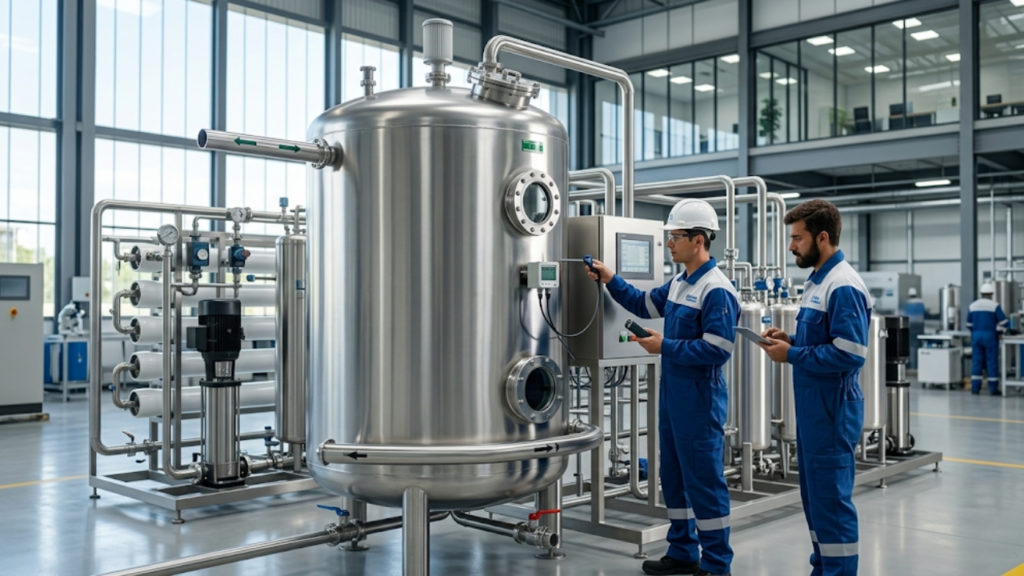
Stainless Steel Water Tank Maintenance
SS tanks require significantly less maintenance than plastic or concrete alternatives – but periodic attention ensures they continue to protect water quality over decades of service.
Annual Cleaning and Inspection Schedule
External inspection: Check for dents, signs of external corrosion (rare in SS304 unless exposed to salt spray or very aggressive environments), condition of insulation cladding if applicable, and condition of all external fittings and valve connections.
Internal inspection and cleaning:
- Isolate the tank – close inlet valve, notify users of temporary supply interruption
- Drain completely via the bottom drain valve
- Enter or access the interior (with appropriate confined space procedures for large tanks)
- Visual inspection: look for any scale deposits, discolouration, standing debris, or biofilm on internal surfaces
- Mechanical cleaning: scrub internal surfaces with a soft brush and food-grade cleaning solution (citric acid or sodium hypochlorite at food-safe concentration)
- Rinse thoroughly until no chemical odour remains
- Inspect all internal fittings, gaskets, and inlet/outlet connections
- Document inspection findings and date
Sanitisation: After cleaning, fill with water containing 50 ppm sodium hypochlorite (bleach solution), hold for 30–60 minutes, drain, and rinse. This process eliminates any residual bacterial contamination and resets the hygienic baseline.
For hospital and pharmaceutical applications, sanitisation frequency should follow the facility’s water quality management protocol – typically quarterly or after any water quality test that shows elevated bacterial counts.
Stainless Steel Water Tank Prices in Bangalore (2026)
Bangalore market pricing for SS water tanks in 2026 varies significantly by grade, capacity, and fabrication quality. These are realistic ranges from verified Bangalore suppliers:
| Capacity | SS304 (Standard) | SS316 (Pharmaceutical) |
| 100 litres | ₹8,000–₹15,000 | ₹14,000–₹25,000 |
| 250 litres | ₹14,000–₹22,000 | ₹24,000–₹38,000 |
| 500 litres | ₹22,000–₹38,000 | ₹38,000–₹65,000 |
| 1,000 litres | ₹38,000–₹65,000 | ₹65,000–₹1,10,000 |
| 2,000 litres | ₹70,000–₹1,20,000 | ₹1,20,000–₹2,00,000 |
| 5,000 litres | ₹1,50,000–₹2,50,000 | ₹2,50,000–₹4,00,000 |
| 10,000 litres | ₹2,80,000–₹5,00,000 | ₹4,50,000–₹8,00,000 |
Prices are indicative for standard vertical cylindrical tanks with standard fittings. Customised configurations, additional fittings, insulation, platforms, and special finishes (electropolish) carry additional cost. Contact Bangalore Aqua stainless steel water tank supplier for exact pricing based on your specification.
SS304 vs HDPE plastic – lifetime cost comparison:
| Factor | HDPE 500L | SS304 500L |
| Initial cost | ₹2,000–₹4,000 | ₹22,000–₹38,000 |
| Expected service life | 7–12 years | 25–30+ years |
| Replacement cycles in 30 years | 3–4 | 1 (possibly zero) |
| Total 30-year cost (tanks only) | ₹8,000–₹16,000 | ₹22,000–₹38,000 |
| Water quality risk | Medium–High (biofilm) | Very Low |
| Cleaning ease | Difficult (after 5 years) | Easy throughout |
| Maintenance cost | Higher (more frequent issues) | Lower |
When lifetime cost is the comparison – rather than just initial purchase price – the SS304 tank’s cost premium over HDPE shrinks to approximately 1.5–2×, while delivering significantly better water quality protection throughout its service life.
Bangalore Aqua: Your Trusted SS Tank Supplier in Bangalore
Bangalore Aqua and Energy Pvt. Ltd. supplies SS304 and SS316 stainless steel water storage tanks for domestic, commercial, community, and industrial water treatment applications across Karnataka.
Why Choose Bangalore Aqua for SS Tanks
Integrated water treatment expertise: Bangalore Aqua supplies SS tanks not as standalone products but as integrated components in complete water treatment systems – sized, specified, and positioned correctly relative to the RO plant, distribution pump, and point-of-use requirements. The tank you receive from Bangalore Aqua is matched to your system, not selected from a generic catalogue.
Food-grade verified fabrication: All tanks supplied by Bangalore Aqua are fabricated from certified SS304 or SS316 sheet with food-grade certification – not from uncertified stock where the actual grade may differ from the stated specification (a documented problem in the commodity tank market).
Complete fittings and integration: Bangalore Aqua supplies tanks with all standard fittings pre-installed and hydrostatically tested – inlet, outlet, overflow, vent, inspection port, level switch connection, and distribution pump connection. No additional fittings needed at installation.
Local fabrication network: Bangalore Aqua works with qualified SS fabricators in Bengaluru – enabling custom sizes, shapes, and configurations that are not available from standard catalogue products. If your building’s utility room requires a 1,200-litre tank in a specific height-limited footprint, Bangalore Aqua can commission a custom fabrication.
Combined supply with RO plant: For customers purchasing complete water treatment systems – RO plant plus SS tank plus distribution pump – Bangalore Aqua supplies the complete package, commissioned as an integrated system. The tank is correctly sized for the RO plant’s output, the distribution pump is correctly sized for the building’s consumption pattern, and the entire system is commissioned and performance-tested together.
SS tank supply and installation available for:
- Domestic RO systems – replacement storage tanks for home systems
- Commercial RO plants – permeate storage for restaurants, hotels, offices
- Community RO water plants – large-capacity storage for apartment complexes and village community plants
- Industrial RO systems – process water storage for factories
- Hospital water treatment systems – SS316 clinical-grade storage for healthcare
See more at Bangalore Aqua’s SS tank supplier Bangalore page and Frazer Town SS tanks manufacturer guide.
Frequently Asked Questions – SS Water Tanks in Bangalore
Q: Is SS304 sufficient for storing RO purified water, or do I need SS316? For purified water storage in most Bangalore residential, commercial, and industrial applications, SS304 is entirely adequate. RO-purified water at 30–80 mg/L TDS has very low corrosive potential – significantly lower than the raw borewell water. SS316 is warranted for pharmaceutical applications (GMP requirement), for healthcare clinical water systems (dialysis, WFI), for coastal Karnataka locations with salt spray exposure, and for industrial applications involving aggressive cleaning chemicals. Read Bangalore Aqua’s dedicated guide on does SS316 rust with RO water for technical detail.
Q: How do I know if a tank claimed to be SS304 is actually SS304 and not SS202? Ask the supplier for the mill test certificate (MTC) – the quality document issued by the steel mill that confirms the chemical composition of the specific heat of steel used in fabricating the tank. The MTC will show the actual chromium, nickel, and carbon content, which can be verified against the SS304 standard (ASTM A240 or IS specification). Reputable Bangalore fabricators provide MTCs as standard. If a supplier cannot or will not provide an MTC, the grade claim is unverified.
Q: Can I convert my existing plastic overhead tank to a stainless steel one in my apartment building? Yes, and this is a common upgrade request. Bangalore Aqua can assess your building’s existing overhead tank structure, recommend the appropriate SS304 tank capacity and configuration, supply the tank, and coordinate removal of the old plastic tank and installation of the new SS tank including reconnection of all existing plumbing. Contact Bangalore Aqua through their contact page for an assessment.
Q: How often should a stainless steel water tank be cleaned? For potable water storage (drinking and cooking water), annual internal inspection and cleaning is recommended. For hospital and pharmaceutical water systems, follow the facility’s water quality management protocol – typically quarterly inspection. For large industrial storage where the full interior cannot be manually inspected, quarterly water quality testing at the outlet combined with annual internal inspection where access permits. See the complete RO water treatment guide for maintenance context.
Q: Can a stainless steel tank be used for overhead installation on a rooftop in Bangalore? Yes – SS304 tanks are specifically well-suited for exposed outdoor installation, including Bangalore rooftops. The passive chromium oxide layer that protects stainless steel is maintained in atmospheric and UV exposure conditions. For external tanks, a standard brushed (#4) finish with no coating is appropriate – no paint or coating is needed or recommended. If the tank will be exposed to salt spray (unlikely in Bangalore but relevant for coastal Karnataka), SS316 is the preferred grade.
Q: What is the difference between a pressurised SS tank and a standard open-top SS tank? A standard atmospheric (open-top, vented) SS tank stores water at atmospheric pressure – appropriate for gravity-fed or pump-fed distribution systems. A pressurised SS tank is a closed vessel rated to contain water under positive pressure – used in systems where pressurised delivery is required without an additional distribution pump. Pressurised vessels are designed to different engineering standards (pressure vessel codes vs. standard tank specifications) and cost significantly more. For most Bangalore water storage applications, standard atmospheric tanks with a distribution pump are the appropriate and more economical choice.
Conclusion: The Last Component in the Chain Is the One That Delivers Water Quality
A ₹15 lakh community RO plant that purifies water to 40 mg/L TDS with zero detectable coliforms – stored overnight in a biofilm-contaminated plastic tank – delivers water quality that reflects the plastic tank, not the RO plant.
The stainless steel water storage tank is the final guardian of the water quality that everything upstream worked to create. Getting it right – specifying the correct grade (SS304 or SS316 depending on application), the correct capacity, the correct construction quality, and maintaining it with annual inspection and cleaning – is the last step in a complete water quality system.
Bangalore Aqua and Energy Pvt. Ltd. supplies, installs, and maintains stainless steel water storage tanks as integrated components of complete water treatment systems across Karnataka – from 100-litre domestic permeate tanks to 10,000-litre community and industrial storage solutions.
Contact Bangalore Aqua today for your SS tank requirement.
📞 +91 76763 93939 | +91 97387 04753 📧 info@bangaloreaqua.com 🌐 bangaloreaqua.com 📍 107/209 2nd Cross, 4th Main Kogilu Layout, Bengaluru – 560064, Karnataka
SS water tank supply and installation across Bengaluru Urban, Bengaluru Rural, Whitefield, Koramangala, Frazer Town, Mysuru, Hubballi, Mangaluru, and all Karnataka locations.