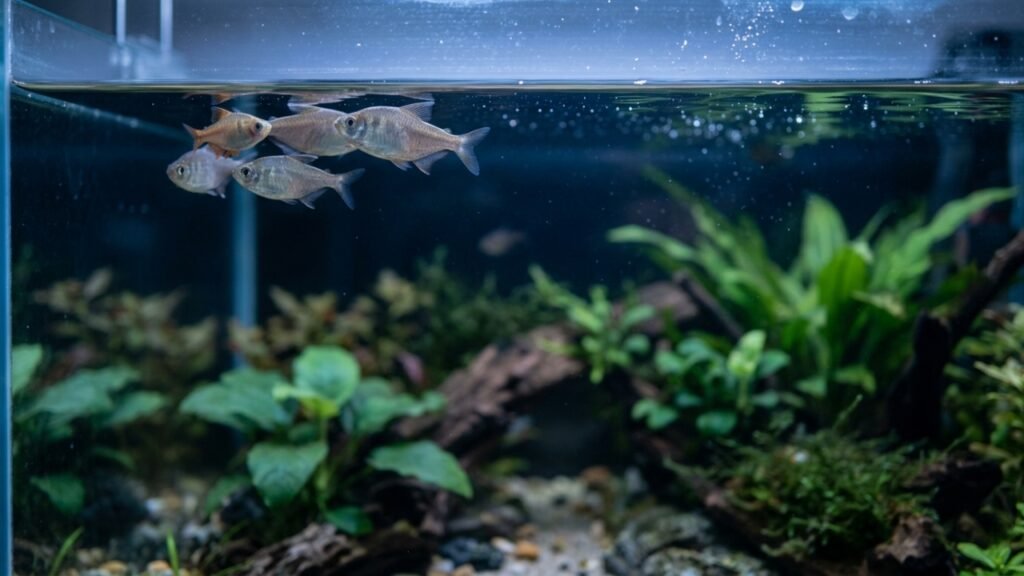
You invested in a good aquarium. You researched fish species, bought the right tank size, set up the filtration properly, and selected your fish carefully. And then, wanting to do the absolute best for your fish, you decided to use RO water – the purest water available – because surely the cleanest water must be the safest water for your aquarium.
And then your fish started behaving strangely. Gasping at the surface. Moving sluggishly. Losing colour. And in some cases, dying – for no immediately obvious reason.
If this sounds familiar, you are not alone. It is one of the most common and heartbreaking mistakes made by aquarium hobbyists across India – and it comes from a completely understandable but fundamentally incorrect assumption: that purer water is always better water for fish.
The truth is more nuanced – and understanding it is the difference between a thriving, healthy aquarium and a repeatedly failing one.
In this complete guide, Bangalore Aqua explains exactly what RO water is, why it can be dangerous for fish when used incorrectly, what the ideal water parameters for your aquarium actually are, and precisely how to use RO water safely and effectively to create the best possible environment for your fish.
Fish Tank Water Quality – Why It Matters More Than Most Hobbyists Realise
Fish do not just live in water – they breathe it, regulate their body chemistry through it, absorb minerals from it, and depend on its stability for virtually every biological function. Unlike terrestrial animals that breathe air and drink water separately, fish are in constant, intimate contact with their aquatic environment. Every parameter of that water – its mineral content, its pH, its temperature, its oxygen level, its hardness – directly and continuously affects the physiology of every fish living in it.
This is why water quality is the single most important factor in aquarium keeping. You can have the best filtration system, the highest quality fish food, and the most carefully maintained tank – but if your water parameters are wrong, your fish will be stressed, susceptible to disease, and at risk of premature death regardless of everything else you are doing right.
And RO water – for all its purity – can create some of the most serious water quality problems an aquarium hobbyist encounters, precisely because of how pure it is.
What Is RO Water?
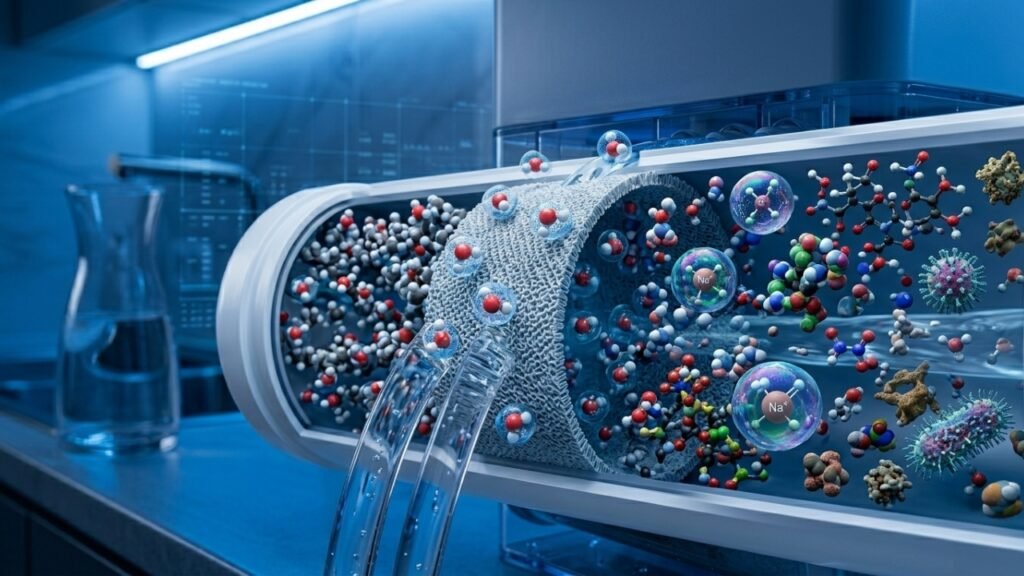
RO stands for Reverse Osmosis – a water purification technology that forces water under high pressure through a semi-permeable membrane with pores small enough to block virtually all dissolved substances while allowing pure water molecules to pass through.
The result is water of extraordinary purity. A well-functioning RO system removes 95–99% of all Total Dissolved Solids (TDS) from the source water – including calcium, magnesium, sodium, potassium, chloride, sulfate, heavy metals, chlorine, bacteria, viruses, and essentially everything else dissolved or suspended in the feed water.
The Low TDS Concept
TDS – Total Dissolved Solids – is the measure of everything dissolved in water, expressed in milligrams per litre (mg/L) or parts per million (ppm). Regular tap water in Bangalore typically has TDS ranging from 150–500 ppm. Borewell water can be 500–2000+ ppm. RO-purified water typically has TDS of just 5–50 ppm – sometimes even lower with a high-quality membrane.
For drinking water, low TDS is generally desirable – it means the water is free of contaminants, heavy metals, excess salts, and impurities. This is why RO water is the gold standard for human drinking water purification.
But for fish – as we are about to explain – extremely low TDS is not a blessing. It is a serious problem.
Is RO Water Safe for Fish Tanks?
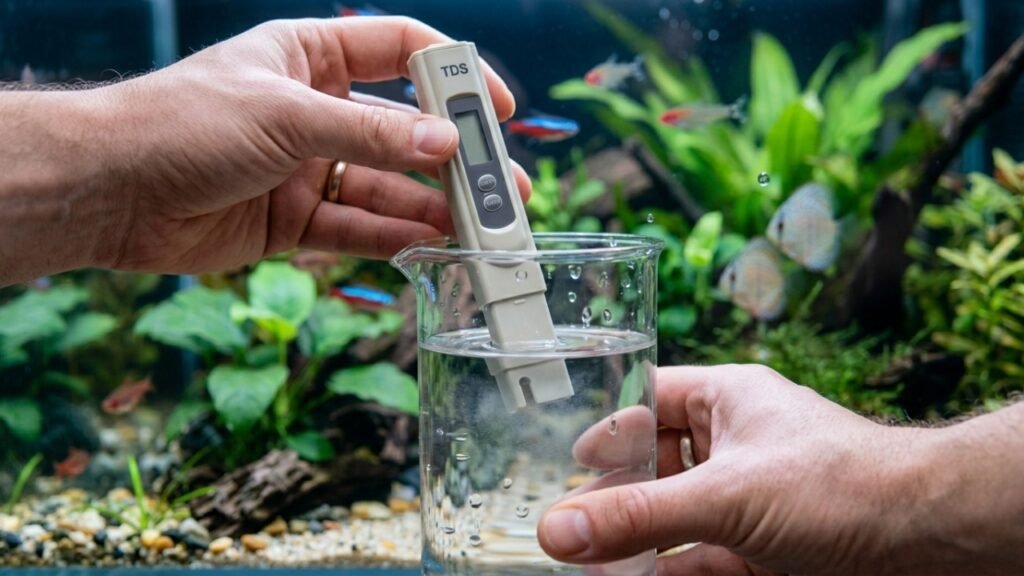
The answer is – yes, but only with the right preparation and conditioning. Never straight out of the RO unit.
Pure, untreated RO water straight from your RO system is essentially a chemical blank – water stripped of virtually everything dissolved in it, including the essential minerals that fish depend on to maintain their internal biological balance. Using this water directly in your fish tank without remineralisation and conditioning is one of the fastest ways to stress, weaken, and ultimately kill your fish.
However – and this is important – RO water used correctly, with proper remineralisation and careful parameter management, is actually one of the best possible water sources for an aquarium. Many advanced aquarium hobbyists and professional breeders specifically use RO water as their starting point precisely because it gives them complete control over every water parameter – rather than having to work around whatever minerals and chemicals happen to be in their tap or borewell water.
The key word is preparation. RO water that has been properly remineralised and conditioned to appropriate parameters for your specific fish species is excellent aquarium water. RO water used directly, without any treatment, is dangerous.
Benefits of Using RO Water in Your Fish Tank
When used correctly, RO water offers several genuine advantages for aquarium keeping – which is why experienced hobbyists and professional breeders value it so highly.
Complete Removal of Chlorine and Chloramines
Municipal tap water in Bangalore and across India is treated with chlorine or chloramines to make it safe for human consumption. These disinfectants are effective at killing bacteria in the water supply – but they are toxic to fish and severely damage the beneficial bacteria that colonise your filter media and make your aquarium’s nitrogen cycle function. Even small concentrations of chlorine cause gill damage, respiratory distress, and immune system suppression in fish.
RO membranes completely remove chlorine and chloramines from the source water – giving you a starting water that is entirely free of these harmful disinfectants, without needing to add dechlorinating chemicals every time you do a water change.
No Heavy Metals
Tap water and borewell water across Bangalore and Karnataka can contain trace concentrations of heavy metals – lead from old pipework, copper from plumbing fittings, iron from groundwater sources. Even at concentrations too low to be harmful to humans, these heavy metals can be toxic to fish over time – accumulating in their bodies, damaging their organs, and suppressing their immune systems. RO purification removes virtually all heavy metal contamination – giving you a clean, metal-free starting point for your aquarium water.
Stable, Predictable Water Quality
Tap water and borewell water quality in Bangalore varies – sometimes significantly – with the season, with changes in municipal treatment, and with fluctuations in groundwater sources. This means the water parameters in your tank can shift unexpectedly when you do water changes using tap water, stressing your fish with sudden parameter changes they are not prepared for. RO water is consistent – its TDS, pH (when conditioned), and mineral profile are entirely under your control, making every water change predictable and stable for your fish.
Perfect Starting Point for Species-Specific Water Chemistry
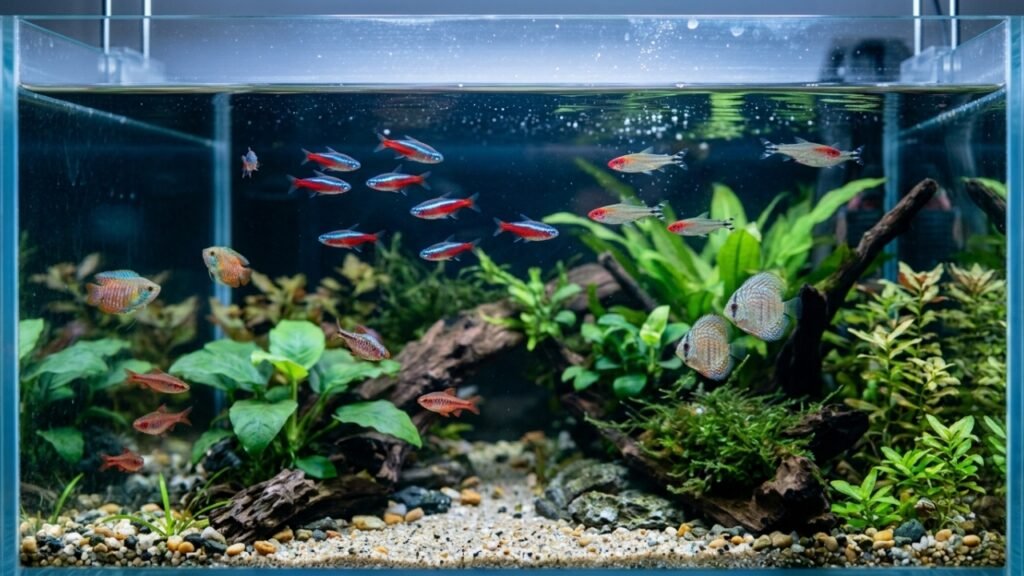
Many fish species – particularly popular aquarium fish from South America and Southeast Asia like discus, angelfish, cardinal tetras, and various cichlids – come from soft, acidic water environments with very specific water chemistry requirements that are impossible to replicate with hard Bangalore tap water. RO water, remineralised to the precise parameters required by your specific fish species, allows you to create a perfect replication of your fish’s natural habitat – something that is simply not achievable with unmodified tap or borewell water in most parts of Karnataka.
Risks of Using RO Water Directly in Your Fish Tank
Despite these benefits, using RO water without proper preparation introduces serious risks that every aquarium hobbyist needs to understand.
Complete Absence of Essential Minerals
Fish are not just living in water – they are physiologically dependent on the minerals dissolved in it. Fish actively absorb calcium, magnesium, potassium, and other essential minerals directly from the water through their gills and skin. These minerals are critical for bone development, muscle function, nerve signal transmission, enzyme activity, and dozens of other essential biological processes.
When you put fish into RO water with TDS of 5–20 ppm, you are putting them into an environment that is almost completely devoid of the minerals their bodies depend on. The fish’s internal mineral concentration is dramatically higher than the surrounding water – creating an extreme osmotic gradient that pulls water into the fish’s body through osmosis while essential minerals leach out. This osmotic stress is physiologically exhausting and, if prolonged, fatal.
Fish Stress and Osmotic Shock
The osmotic imbalance created by very low TDS water is not a gradual, comfortable adjustment – it is an acute physiological stress. Fish moved directly from normal tap water (200–400 ppm TDS) to pure RO water (5–20 ppm TDS) experience osmotic shock – a rapid shift in their internal fluid balance that their kidneys and osmoregulatory systems cannot compensate for quickly enough. Symptoms of osmotic shock include lethargy, loss of balance, fin clamping, surface gasping, and rapid death in severe cases.
Even fish that are acclimated gradually to low TDS RO water remain under chronic osmotic stress if the water’s mineral content is below their physiological requirements – making them more susceptible to disease, less able to heal from injury, and shorter-lived than fish kept in properly mineralised water.
pH Instability – The Invisible Danger
This is one of the most dangerous and least understood risks of using RO water in aquariums. Pure RO water has virtually no buffering capacity – meaning it contains almost no carbonate or bicarbonate ions that would normally resist changes in pH.
In a fish tank, biological processes – fish respiration producing CO₂, bacterial activity in the filter, decomposing organic matter – continuously drive pH downward. In tap water with normal carbonate hardness (KH), these pH changes are buffered – resisted by the carbonate/bicarbonate system in the water – keeping pH relatively stable. In pure RO water with no buffering capacity, pH can crash rapidly and dramatically – dropping from 7.0 to 5.0 or even lower within hours in a heavily populated tank. This pH crash is acutely toxic to fish and is the cause of many mysterious sudden deaths in aquariums filled with untreated RO water.
Ideal TDS Levels for Aquarium Fish
Different fish species have evolved in water with very different mineral and TDS profiles – and matching your aquarium water parameters to your fish’s natural habitat requirements is the foundation of good aquarium keeping.
Freshwater Fish – TDS Requirements
| Fish Category | Ideal TDS Range | Notes |
| Soft Water Species (Discus, Cardinal Tetras, Apistogramma) | 50 – 150 ppm | Native to Amazon basin soft, acidic water |
| General Community Fish (Tetras, Livebearers, Corydoras) | 100 – 300 ppm | Adaptable but need some minerals |
| African Cichlids (Malawi, Tanganyika) | 200 – 400 ppm | Hard, alkaline water species |
| Goldfish & Koi | 150 – 300 ppm | Prefer moderately hard water |
| Guppies & Mollies | 150 – 250 ppm | Hard water livebearers |
| Planted Tanks | 100 – 250 ppm | Plants also need dissolved minerals |
Saltwater & Marine Aquariums
For marine and reef aquariums, RO water – or more precisely RO/DI (Reverse Osmosis followed by Deionisation) water – is actually the recommended standard for mixing synthetic sea salt. The logic is that you want to start with a completely blank slate – water with zero dissolved solids – so that when you add synthetic sea salt mix, you know exactly what mineral concentrations you are creating. Using tap water with its variable mineral content as the base for salt mixing introduces unpredictable parameters into your reef tank chemistry.
For marine aquariums, the ideal salinity is typically 1.023–1.026 specific gravity (approximately 32–35 ppt total dissolved solids as salt), achieved by mixing a precisely measured quantity of high-quality synthetic sea salt into RO or RO/DI water.
How to Use RO Water Safely in Your Aquarium
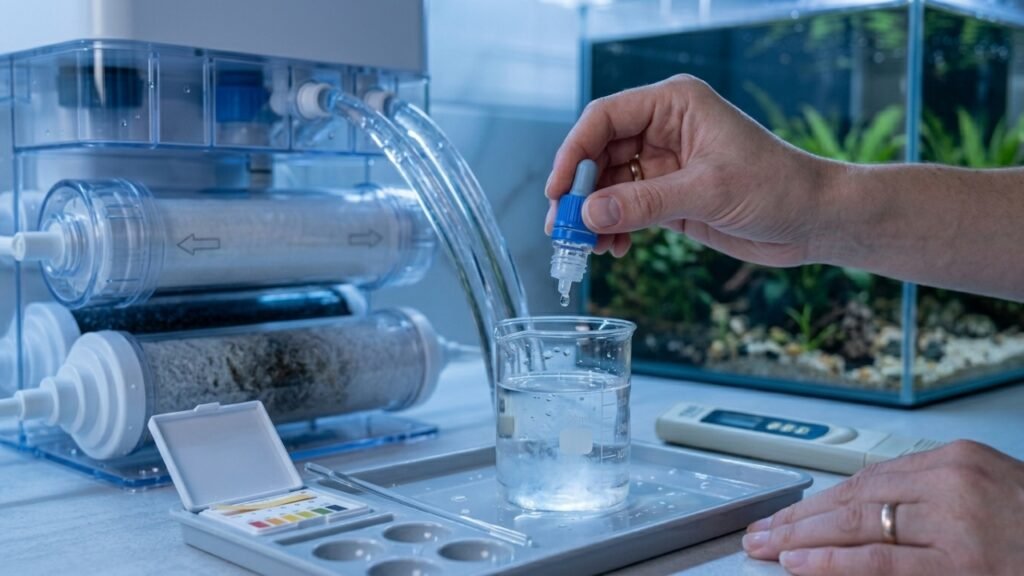
Now that you understand both the benefits and the risks, here is exactly how to use RO water correctly and safely for your fish tank:
Remineralisation – The Essential Step
Remineralisation is the process of adding essential minerals back to RO water after purification – restoring the mineral content that the RO membrane removed and creating water with the appropriate TDS, hardness, and buffering capacity for your specific fish species.
Commercial Remineralisation Products
The simplest and most precise approach is to use a commercial remineralisation product specifically designed for aquarium use:
For Freshwater Aquariums: Products like Seachem Equilibrium, Brightwell Aquatics Remineraliz, or RO Right add essential minerals including calcium, magnesium, potassium, and trace elements to RO water – restoring hardness and TDS to species-appropriate levels. Follow the manufacturer’s dosing instructions based on your target TDS and water volume.
For Soft Water Species: Products like Seachem Discus Buffer or ADA Mineralizer are formulated specifically for species that prefer soft, slightly acidic water – adding minerals at low concentrations that achieve appropriate TDS without excessive hardness.
For Saltwater Aquariums: Mix a high-quality synthetic sea salt (Instant Ocean, Red Sea, Reef Crystals) into RO or RO/DI water following the manufacturer’s instructions for your target salinity.
Crushed Coral or Aragonite for Buffering
Adding a small amount of crushed coral or aragonite substrate in a mesh bag in your filter – or directly in the tank for appropriate species – provides a natural source of calcium carbonate that slowly dissolves into the RO water, raising KH (carbonate hardness) and providing the buffering capacity that prevents dangerous pH crashes.
Indian Almond Leaves & Driftwood for Soft Water Species
For soft water, acidic-water species like discus and wild cardinal tetras, adding Indian almond leaves and driftwood to remineralised low-TDS RO water releases tannins and humic acids that gently acidify the water and mimic the blackwater conditions of their natural Amazon habitat – creating ideal water chemistry that is essentially impossible to achieve with unmodified tap water.
Mixing RO Water with Tap Water
A simpler approach – particularly for hobbyists who keep adaptable community fish species rather than demanding soft water species – is to mix RO water with tap or borewell water in a ratio that achieves your target TDS and parameters.
How to calculate your mix ratio:
If your tap water has TDS of 400 ppm and you want tank water at 150 ppm:
Target TDS = (RO water fraction × RO TDS) + (Tap water fraction × Tap TDS)
150 = (X × 10) + ((1-X) × 400)
Solving: approximately 65% RO water + 35% tap water = ~150 ppm TDS
This blending approach gives you the benefits of RO water – reduced chlorine, heavy metal dilution, reduced hardness – while retaining enough of the tap water’s mineral content to provide biological stability and buffering capacity without the need for commercial remineralisation products.
Important: Always dechlorinate the tap water portion before mixing – or let the mix age for 24 hours with aeration – to ensure chlorine is fully dissipated before adding the water to your tank.
Always Test Before Adding to Your Tank
Regardless of whether you are remineralising or blending, always test your prepared water before adding it to your tank – checking TDS, pH, KH (carbonate hardness), and GH (general hardness). Testing takes less than five minutes and gives you certainty that the water you are adding matches your tank parameters – preventing the sudden parameter shifts that cause stress and death in fish.
Gradual Acclimation When Changing Water Source
If you are switching from tap water to RO-based water for the first time, never change all the water at once. Introduce the new water gradually through a series of partial water changes over 1–2 weeks – allowing your fish time to adjust to the slowly changing parameters rather than experiencing a sudden dramatic shift in water chemistry.
RO Water vs Tap Water for Aquariums – Complete Comparison
| Parameter | Tap / Borewell Water | RO Water (Untreated) | RO Water (Correctly Remineralised) |
| TDS | 150 – 2000+ ppm | 5 – 50 ppm | Customised to species requirement |
| Chlorine / Chloramines | Present – harmful to fish | None | None |
| Heavy Metals | May be present | None | None |
| Hardness (GH/KH) | Variable – often too high | Zero | Precisely controlled |
| pH Stability | Generally stable | Very unstable – pH crash risk | Stable with proper buffering |
| Consistency | Variable seasonally | Consistent | Consistent |
| Mineral Content | Present – uncontrolled | None | Precisely controlled |
| Suitability for Soft Water Species | Poor – too hard | Dangerous untreated | Excellent |
| Suitability for Hard Water Species | Often suitable | Dangerous untreated | Good with correct remineralisation |
| Ease of Use | Simple – no preparation | Requires remineralisation | Moderate – requires preparation |
| Overall Best Use | General, adaptable fish in areas with appropriate tap water quality | Never use untreated | Demanding species & marine aquariums |
Common Mistakes Aquarium Hobbyists Make with RO Water
Mistake 1 – Using Pure RO Water Directly Without Any Treatment
The most common and most dangerous mistake. Pure RO water with no remineralisation or blending has zero mineral content, zero buffering capacity, and creates immediate osmotic stress and pH instability in your tank. Never put untreated RO water directly into a fish tank. Always remineralise or blend first.
Mistake 2 – Not Testing Water Parameters After Remineralisation
Adding a remineralisation product without testing the resulting water is guessing – and guessing with your fish’s life. Always test TDS, pH, KH, and GH after remineralising and before adding water to your tank. The five minutes of testing is always worth it.
Mistake 3 – Forgetting to Maintain the RO System
An RO membrane that hasn’t been properly maintained produces water of unpredictable and declining quality. A degraded membrane allows progressively more dissolved solids to pass through into the permeate – meaning the TDS of your “RO water” creeps up over time without you realising it. Regular water purifier maintenance – including timely filter and membrane replacement – is essential to ensure your RO system continues producing consistently pure water for your aquarium. Check your RO output TDS periodically with a TDS meter to verify membrane performance.
Mistake 4 – Sudden Large Water Changes with Different Parameter Water
Changing 50–70% of your tank water in one go using water with very different parameters from your existing tank water – even if the new water is correctly remineralised – can stress or kill fish through rapid parameter shift. Keep water changes to 20–30% at a time and ensure the replacement water closely matches your tank’s existing parameters in TDS, pH, and temperature.
Mistake 5 – Using RO Water for Species That Don’t Need It
Not all fish need or benefit from RO water. Adaptable community fish like most tetras, livebearers, and goldfish do perfectly well in conditioned tap water with appropriate TDS. Using RO water for these species adds preparation effort without meaningful benefit – and introduces the risks of remineralisation errors unnecessarily. Reserve the extra effort of RO water preparation for species that genuinely require it.
Mistake 6 – No Buffering for pH Stability
Remineralising for TDS and general hardness without specifically addressing KH (carbonate hardness) leaves your tank vulnerable to pH crashes – even if your general mineral content is appropriate. Always ensure your remineralised water has adequate KH – typically at least 4–6 dKH – to provide the buffering capacity that prevents pH from dropping rapidly between water changes.
Mistake 7 – Mixing RO Water with Unchlorinated Tap Water Improperly
When blending RO water with tap water, always treat the tap water portion for chlorine before mixing and adding to the tank. Adding a 50% tap water blend directly to your tank without dechlorination still exposes your fish to half the chlorine concentration of straight tap water – which is still harmful, particularly to sensitive species and beneficial filter bacteria.
Conclusion – RO Water Is a Powerful Tool, Not a Simple Solution
RO water is one of the most valuable tools available to the serious aquarium hobbyist. Its purity, consistency, and controllability make it the ideal starting point for creating precisely the water chemistry that your fish’s species and natural habitat require – and for advanced fishkeeping, breeding sensitive species, and maintaining demanding reef aquariums, it is essentially indispensable.
But it is a tool that must be used with knowledge and preparation. Pure, untreated RO water is dangerous in a fish tank – not because it is dirty, but because it is too clean. The minerals, hardness, and buffering capacity that RO removes are not just impurities – they are the biological building blocks that fish depend on for health and survival.
The formula for success is straightforward:
Good RO Water + Proper Remineralisation + Regular Parameter Testing + Correct Species Match = Excellent Aquarium Water
Skip any part of that formula and you risk the health and lives of the fish in your care.
And one more thing – the quality of your RO water is only as good as the condition of your RO system. An unmaintained RO membrane gradually loses its rejection efficiency, delivering water of declining purity that undermines your entire aquarium water management effort. Regular water purifier maintenance – timely filter cartridge replacement, membrane servicing, and periodic TDS verification – ensures your RO system continues delivering the consistently pure water that your aquarium and your fish deserve.
At Bangalore Aqua, we supply, install, and maintain RO systems for homes, businesses, industries, and yes – serious aquarium hobbyists – across Bangalore, Mysuru, Mangaluru, Hubballi and Karnataka. If you have questions about your RO system’s performance or need expert guidance on water purification solutions, our team is always ready to help.
📞 Call / WhatsApp: +91 76763 93939 | +91 97387 04753
📧 Email: info@bangaloreaqua.com
🌐 Visit: bangaloreaqua.com
Karnataka’s No. 1 Water Treatment Company – Clean water for drinking, industry, community, and everything in between.