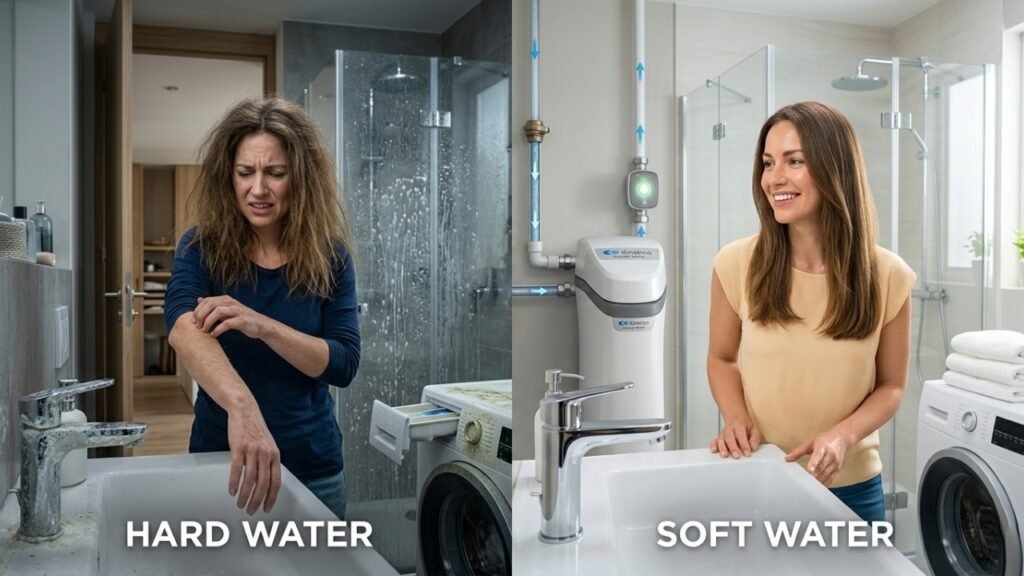
Hard water is one of those problems that sneaks up on you. It starts with little things – soap that doesn’t lather well, a film on your skin after showering, white stains on bathroom fixtures. Then you realize your appliances aren’t working as efficiently. Your water heater is struggling. Your washing machine seems tired. And suddenly, what seemed like a minor inconvenience has become a real problem affecting your whole home.
The good news? There’s a simple, effective solution. A hard water softener can transform your water quality, protect your appliances, save you money, and improve your daily life. This complete guide explains everything you need to know about hard water softeners – what they do, how they work, what’s best for your situation, and how to choose the right one.
What Is Hard Water? Understanding the Problem
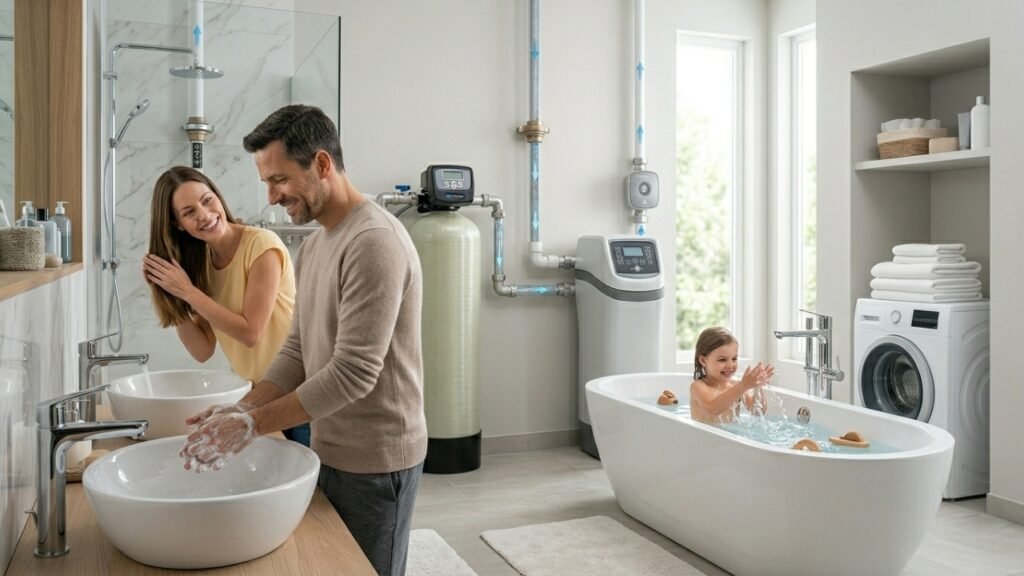
Hard water sounds harmless, but it’s actually a common issue affecting millions of homes. Hard water contains high levels of dissolved minerals – primarily calcium and magnesium. These minerals aren’t necessarily harmful to drink, but they cause numerous problems throughout your home.
5 Signs of Hard Water – How to Know You Have It
If you’re wondering whether you have hard water, look for these clear signs:
1. White, crusty deposits on faucets and fixtures
These deposits (called limescale) form when hard water evaporates. They’re stubborn and difficult to remove. If you see white buildup around your taps, you definitely have hard water.
2. Dull, sticky clothes after washing
Hard water prevents detergent from working properly. Clothes come out stiff, dull, and don’t feel fresh. You might think you need better detergent, but the problem is your water.
3. Soap scum that won’t come off your shower
Hard water reacts with soap to create a sticky residue that builds up on shower walls and doors. It looks ugly and takes serious scrubbing to remove.
4. Dry, itchy skin and dull hair after showering
Hard water leaves a film on your skin and hair. Your skin feels uncomfortable and your hair looks lifeless, no matter what products you use.
5. Reduced water pressure and appliance efficiency
Mineral buildup inside pipes narrows water flow. Your water heater takes longer to heat water. Your dishwasher and washing machine work harder and less effectively.
If you notice even a few of these signs, hard water softening can transform your home.
Is Hard Water Bad for Rosacea?
If you have rosacea, hard water can actually make your condition worse. Rosacea-prone skin is already sensitive, and hard water adds another irritant. The mineral deposits in hard water can trigger rosacea flare-ups, increase redness, and make your skin more uncomfortable.
Many people with rosacea report that switching to soft water significantly improves their skin condition. Soft water is gentler, doesn’t leave mineral residue, and allows your skin to breathe properly. If you have rosacea and hard water, a water softener isn’t just convenient – it’s therapeutic.
What Is the Best Way to Soften Hard Water?
Multiple methods exist for softening hard water, but they’re not all equally effective. Understanding your options helps you choose the best solution for your specific situation.
Ion Exchange Water Softening – The Gold Standard
Ion exchange is the most effective and widely used method for hard water softening. Here’s how it works:
Hard water passes through a tank containing special resin beads. These beads attract calcium and magnesium minerals while releasing sodium ions. The result is soft water with virtually all hardness minerals removed.
Why it’s the best: It’s highly effective (removes 95-99% of hardness), works continuously, requires minimal maintenance, and lasts 10-15 years.
Water Softening Vs. Other Methods
Water Softening (Ion Exchange) – Removes hardness minerals completely. Most effective. Best long-term solution.
Reverse Osmosis – Removes almost all dissolved substances. Good for drinking water but wastes water. Usually combined with softening for complete treatment.
Magnetic Water Treatment – Claims to change mineral properties. Limited scientific evidence. Less reliable than proven softening.
Chemical Treatment – Adds chemicals to neutralize hardness. Works but requires constant chemical additions. Less popular than softening.
Chelation – Binds minerals so they don’t precipitate. Works but expensive and usually used for specific applications.
For most homes, ion exchange water softening is the clear winner. It’s proven, effective, affordable, and reliable.
What Kind of Water Softener Is Best for Hard Water?
Not all water softeners are created equal. The best hard water softener depends on your specific situation, water hardness level, family size, and budget.
High-Hardness Water Softening – The Challenge
If you have extremely hard water (over 400 ppm), you need a more heavy-duty system. Standard residential softeners might struggle with very high hardness levels. Consider:
Dual-Tank Systems – Two softening tanks ensure continuous soft water supply even during regeneration cycles. Ideal for high-hardness water and large families.
High-Capacity Resin Beds – Larger resin bed holds more softening capacity, meaning less frequent regeneration and better performance with very hard water.
Water Testing First – Before choosing a softener, get professional water hardness testing. This determines exactly what capacity you need.
Different Types of Hard Water Softeners
Salt-Based Water Softeners – Use sodium or potassium salt for regeneration. Most effective but requires regular salt refills. Best overall choice.
Salt-Free Water Softeners – Don’t use salt but claim to reduce hardness effects. Less proven than salt-based systems. Good for supplemental use.
Dual-Tank Softeners – Two tanks provide continuous soft water. More expensive but no water interruption during regeneration. Perfect for large families.
Portable Water Softeners – Compact systems for apartments or renters. Good for point-of-use softening but less effective than whole-house systems.
Magnetic/Electronic Softeners – Claim to alter mineral properties without removing them. Less reliable than proven ion exchange systems.
For hard water problems, salt-based ion exchange softeners consistently outperform all alternatives.
Hard Water Softener for Home – Complete Solution
If you want to treat all water in your home, a whole-house hard water softener is the answer. This system treats water at your main water line, ensuring soft water flows from every tap.
Benefits of Whole-House Water Softening
All appliances protected – Washing machine, dishwasher, water heater, all benefit from soft water
Complete protection – Every tap delivers soft water, not just kitchen faucets
Maximum savings – Less soap needed, longer appliance life, lower water heating costs
Best experience – Soft water for showering, laundry, cleaning, and everything else
Pipes protected – Scale buildup prevention extends plumbing system life
Installation and Maintenance
A whole-house system requires professional installation near your main water line. The system needs proper integration with your plumbing and electrical systems.
Maintenance is straightforward – refill salt solution monthly or quarterly depending on hardness level and usage. Annual professional inspection ensures everything works optimally.
Hard Water Softener for Tank – Protecting Your Water Storage
Many homes in India have water tanks (overhead or underground). A tank-mounted hard water softener treats water as it enters your tank, ensuring stored water stays soft.
Why Tank Softening Matters
Water in tanks sits for hours or days. Without softening, minerals precipitate and accumulate. A tank softener prevents this, keeping your entire water supply soft.
This is especially important if your tank is large or you use the tank water for everything – drinking, cooking, washing, all of it.
Installation Location
Tank softeners typically install at the tank inlet – where water enters your tank. Professional plumbing connection ensures proper integration and optimal performance.
Hard Water Softener for Bathroom – Targeted Solution
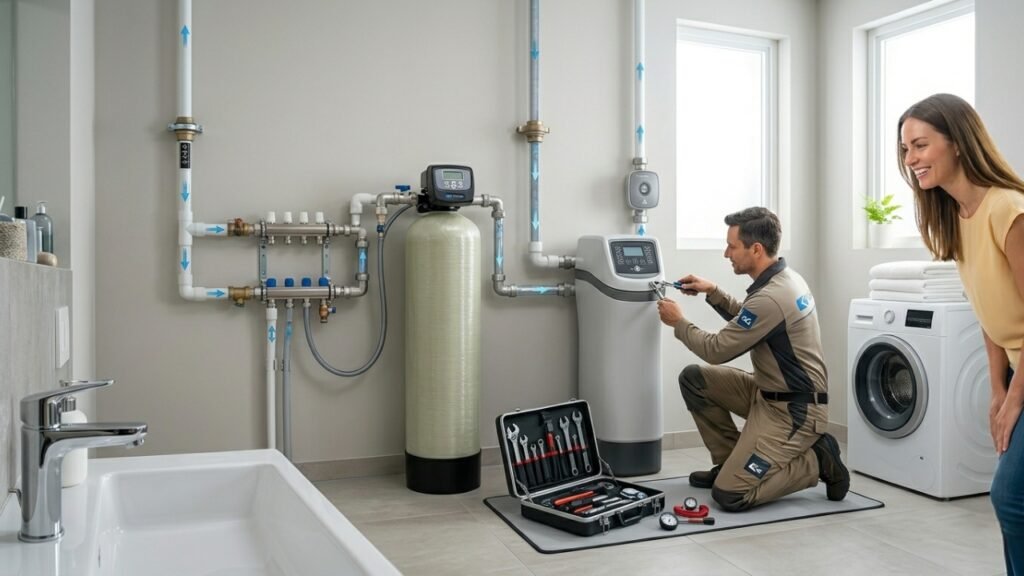
Sometimes you don’t need whole-house softening. A bathroom-specific hard water softener addresses hard water problems where you shower and bathe.
Benefits for Bathroom Use
Better shower experience – Soft water feels silky and truly clean
Healthier skin – No mineral film, reduced irritation, better for sensitive skin
Cleaner hair – Hair feels softer, shinier, more manageable
No soap scum – Bathroom stays cleaner, less scrubbing needed
Especially helpful for rosacea – Gentle on sensitive, rosacea-prone skin
Installation Options
Bathroom softeners can be:
– Connected to your shower inlet directly
– Integrated with your hot water system
– Installed as point-of-use systems
Professional installation ensures proper water flow and effectiveness.
Hard Water Softener for Hair – Special Consideration
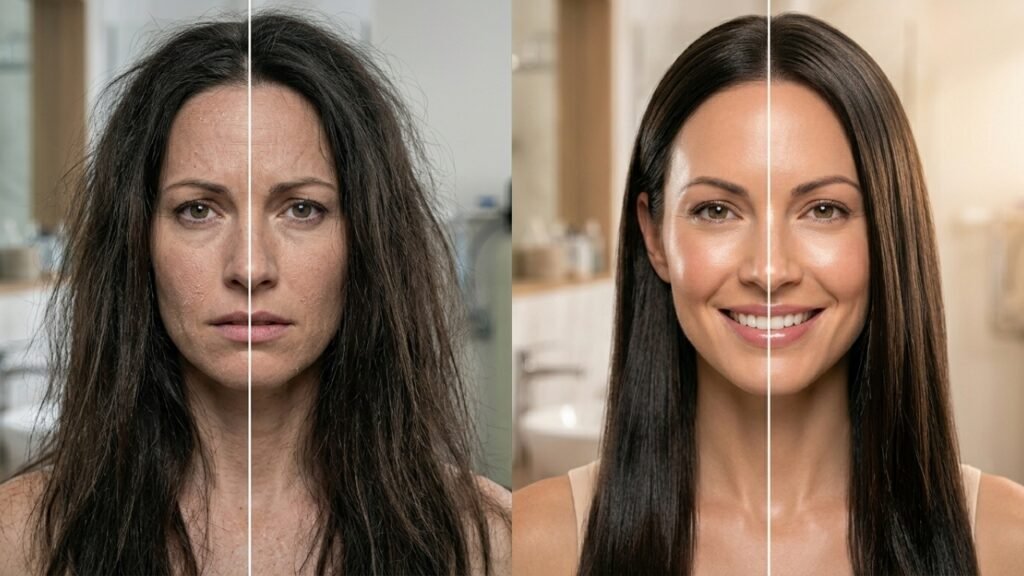
Hard water specifically damages hair. If you’re struggling with dull, tangled, unmanageable hair, hard water might be the culprit.
How Hard Water Damages Hair
Hard water minerals coat each hair strand, blocking moisture and causing:
– Dullness and lack of shine
– Tangles and frizz
– Difficulty styling
– Product buildup
– Limp, lifeless appearance
Hard Water Softener Benefits for Hair
Switching to soft water transforms hair quality:
– Hair becomes shinier and healthier looking
– Tangles reduce significantly
– Styling becomes easier
– Products work more effectively
– Hair feels softer and more manageable
Many people report that soft water fixes hair problems that no shampoo or treatment could solve.
Hard Water Softener for Washing Machine – Protecting Your Appliance
Your washing machine works hard enough without hard water making it harder. A dedicated washing machine softener protects your appliance and improves wash quality.
How Hard Water Damages Washing Machines
Hard water causes:
– Mineral buildup inside the machine
– Reduced cleaning effectiveness
– Longer wash cycles
– Higher energy consumption
– Premature wear and breakdown
Benefits of Machine-Specific Softening
– Longer appliance lifespan (5-10 years extra)
– Better cleaning results
– Faster wash cycles
– Lower energy bills
– No mineral residue on clothes
Hard Water Softener for Flat – Apartment Solutions
Living in an apartment doesn’t mean you can’t have soft water. Several solutions work well for flats and smaller spaces.
Point-of-Use Softeners
Compact softeners attach directly to specific taps, providing soft water where you need it most. Perfect for apartments where you can’t modify main plumbing.
Portable Systems
Portable water softeners provide flexible solutions for renters and apartments. They require no permanent installation and move with you if you relocate.
Advantages for Flat Dwellers
– No landlord approval needed for point-of-use systems
– Compact and space-saving
– No permanent installation
– Portable if you move
– Affordable options available
Hard Water Softener for Tap – Quick Solution
A tap-mounted hard water softener provides soft water at a single faucet – your kitchen tap, bathroom tap, or shower.
Best Uses for Tap Softeners
– Kitchen sink (for cooking and drinking water)
– Master bathroom (for shower)
– Utility sink (for cleaning)
– Any specific tap where you want soft water
Advantages
– Very affordable
– Quick, easy installation
– No plumbing modifications needed
– Great for targeted softening
– Perfect for testing if softening helps your situation
Hard Water Softener Price – What to Expect
Water softener pricing depends on type, capacity, and quality. Understanding costs helps you budget appropriately.
Price Breakdown
Small Point-of-Use Softeners: ₹8,000 – ₹20,000
– Single tap installation
– Portable options
– Affordable entry-level solution
Standard Whole-House Systems: ₹25,000 – ₹60,000
– Complete home protection
– Professional installation included
– 10-15 year lifespan
– Most popular choice
High-Capacity/Dual-Tank Systems: ₹50,000 – ₹1,00,000+
– For very hard water or large families
– Continuous soft water supply
– Premium equipment
Tank-Mounted Systems: ₹20,000 – ₹50,000
– Treats water in your tank
– Protects storage system
– Good for multi-tank homes
Installation: ₹5,000 – ₹12,000 (usually included)
Ongoing Costs:
– Salt solution refills: ₹500-1,500 (monthly/quarterly)
– Annual maintenance: ₹2,000-5,000
– Filter replacements: ₹1,000-3,000 (every 6-12 months)
Cost vs. Benefit Analysis
Initial softener cost seems significant until you calculate savings:
Monthly Savings from Soft Water:
– Reduced soap/detergent use: ₹100-200
– Lower water heating costs: ₹300-500
– Reduced appliance replacement needs: ₹200-400
– Total monthly savings: ₹600-1,100
Payback Period: 12-24 months (then pure savings)
Long-term savings: Years of continued savings make softeners very cost-effective.
Best Hard Water Softener – How to Choose
With so many options available, choosing the best hard water softener requires considering several factors.
Step 1: Test Your Water Hardness
Before choosing a softener, measure your water hardness:
– Get professional water testing (we provide free testing)
– Measure in ppm (parts per million) or gpg (grains per gallon)
– Understand your baseline before treatment
Step 2: Determine Your Family Size and Usage
Softener capacity must match your water consumption:
– Small family (2-3 people): 30-50 LPH capacity
– Medium family (4-6 people): 50-100 LPH capacity
– Large family (7+ people): 100+ LPH capacity
– High usage: Dual-tank systems recommended
Step 3: Consider Your Water Source
– Municipal water vs. well water
– Water storage (tank or direct)
– Pre-existing filtration systems
– Specific contaminants beyond hardness
Step 4: Evaluate Your Budget
– Initial investment
– Installation costs
– Ongoing maintenance (salt refills)
– Annual service costs
– Long-term total cost of ownership
Step 5: Choose Your System Type
– Whole-house (best overall)
– Tank-mounted (if you have tanks)
– Bathroom/tap-specific (targeted solution)
– Portable (for renters/apartments)
Step 6: Select a Reputable Dealer
Choose a dealer that:
– Tests water comprehensively
– Recommends based on your needs
– Offers professional installation
– Provides ongoing support
– Has customer testimonials
The Bottom Line – Why Hard Water Softening Matters
Hard water affects your home in dozens of ways – some visible, some hidden. A hard water softener solves these problems completely:
✓ Protects appliances and extends their lifespan
✓ Improves water quality for cleaning and personal care
✓ Saves money on soap, detergent, and energy
✓ Improves skin and hair quality
✓ Prevents pipe damage and scale buildup
✓ Provides soft, comfortable water throughout your home
Whether you choose a whole-house system, tank-mounted softener, or targeted bathroom solution depends on your situation. But choosing some form of hard water softening is an investment in your home, your health, and your long-term savings.
Get Your Hard Water Softener Solution Today
Stop struggling with hard water problems. Stop buying expensive soaps and shampoos trying to solve a water problem. Stop watching your appliances wear out prematurely.
Bangalore Aqua provides comprehensive hard water softening solutions with professional water testing, transparent pricing, expert installation, and ongoing support.
📍 Office Location: [107/209 2nd Cross, 4th Main Rd, Kogilu Layout, Yelahanka, Bengaluru, Karnataka 560064]
📞 Call or WhatsApp: [097387 04753]
📧 Email: [info@bangaloreaqua.com]
🌐 Website: bangaloreaqua.com
⏰ Available: Monday-Saturday, 9 AM – 6 PM
Get your free water hardness testing and personalized solution recommendation today. Let us help you experience the difference soft water makes.
Soft Water. Better Life. Smarter Choice.
© 2026 Bangalore Aqua – Hard Water Softener Solutions