
Best Industrial RO Plant Manufacturer in Chitradurga (2026)
DRINK SAFE AND PURE
Bangalore Aqua - Industrial RO Plant Manufacturer for Chitradurga District
Chitradurga is one of Karnataka’s most geographically dramatic districts – a semi-arid landscape of granite outcrops, historic forts, iron ore deposits, and open wind corridors that have made it both Karnataka’s most storied mining district and, more recently, home to some of India’s most ambitious renewable energy infrastructure.
It is also one of Karnataka’s most water-challenged districts. Chitradurga’s groundwater carries elevated fluoride concentrations across several taluks – Pavagada, Molakalmuru, Challakere, Hosadurga, and Kudligi – creating a documented public health challenge that has drawn specific attention from the Karnataka state government, which has acknowledged that half the fluoride-affected population in these taluks belongs to SC/ST communities warranting priority intervention.
For Chitradurga’s industries – iron ore mining, granite quarrying, Molakalmuru’s GI-protected silk weaving, food processing, and the emerging renewable energy sector – water treatment is both an operational requirement and, increasingly, a community responsibility. For Chitradurga’s villages and communities, it is a health necessity.
Bangalore Aqua and Energy Pvt. Ltd. serves Chitradurga’s full industrial, commercial, and community water treatment requirements – manufacturing industrial RO systems, community water plants, and complete water treatment solutions from our Bengaluru facility with committed central Karnataka field service.
📞 +91 76763 93939 | +91 97387 04753 📧 info@bangaloreaqua.com 🌐 bangaloreaqua.com/best-ro-water-treatment-plant-supplier-in-chitradurga/
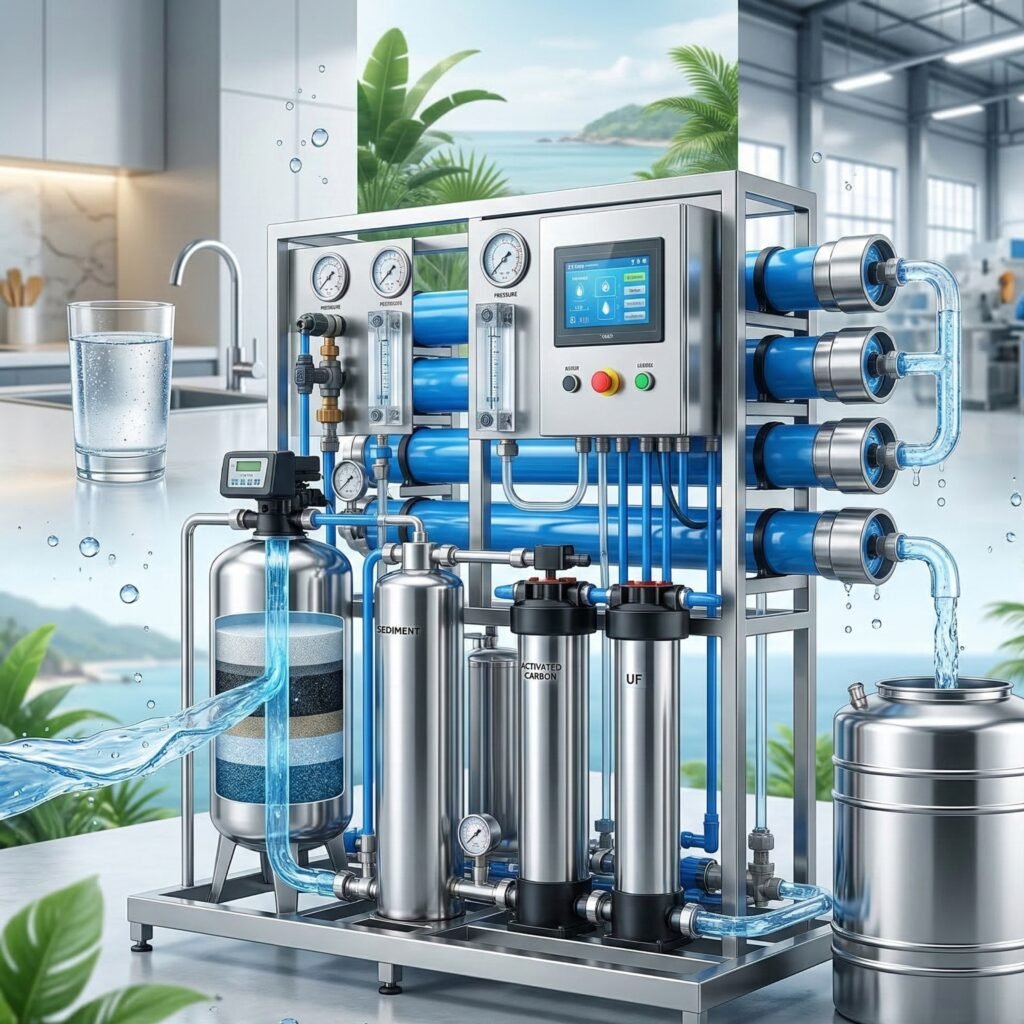
Chitradurga's Water Quality: The Fluoride Crisis and Industrial Borewell Challenges
The Fluoride Emergency Across Chitradurga’s Taluks
Chitradurga’s water quality challenge is not merely elevated TDS or high hardness – characteristics shared by many Karnataka districts. It is a specific, documented fluoride contamination emergency that has caused measurable public health damage across the district’s rural and semi-urban population.
Fluoride contamination in Chitradurga’s groundwater results from the district’s geological composition – granite and gneissic formations with fluorite mineral deposits that leach fluoride into groundwater over geological time. When borewell water carries fluoride above the BIS safe limit of 1.0 mg/L, the health consequences are well-documented:
- Dental fluorosis develops in children who consume high-fluoride water during tooth development – enamel mottling, discolouration, and increased susceptibility to decay
- Skeletal fluorosis develops with long-term high-fluoride consumption – joint pain, stiffness, and in severe cases, bone deformity that impairs the ability to work in agriculture and physical labour
- Gastrointestinal symptoms are common at moderate excess fluoride levels
Karnataka’s state government has explicitly identified Chitradurga’s fluoride-affected taluks as priority intervention zones, acknowledging that 50% of the affected population belongs to SC/ST communities. The state’s ₹2,250 crore programme for fluoride-affected districts in Karnataka is the government’s recognition of the scale of this problem.
RO is the definitive solution for fluoride: Water softeners do not remove fluoride. UV disinfection does not remove fluoride. Only reverse osmosis – achieving 90–96% fluoride rejection – reliably reduces fluoride in groundwater to safe levels. For Chitradurga, this makes RO plants not just a water treatment convenience but a public health necessity.
Industrial Zone Borewell Profile
Beyond the fluoride issue, Chitradurga’s industrial and commercial borewell water presents:
- TDS: 500–1,400 mg/L across the district – higher in the more arid southern taluks (Molakalmuru, Pavagada) and lower near the Vedavathi river corridor
- Hardness: 250–600 mg/L as CaCO₃ – moderate to high, requiring softener pre-treatment for process-sensitive operations
- Iron: Variable – some Chitradurga borewells, particularly near iron ore deposits in the Challakere area, show elevated iron that requires dedicated pre-treatment
- Seasonal variation: Summer TDS peaks are significant in Chitradurga’s semi-arid environment – systems must be specified for worst-case conditions
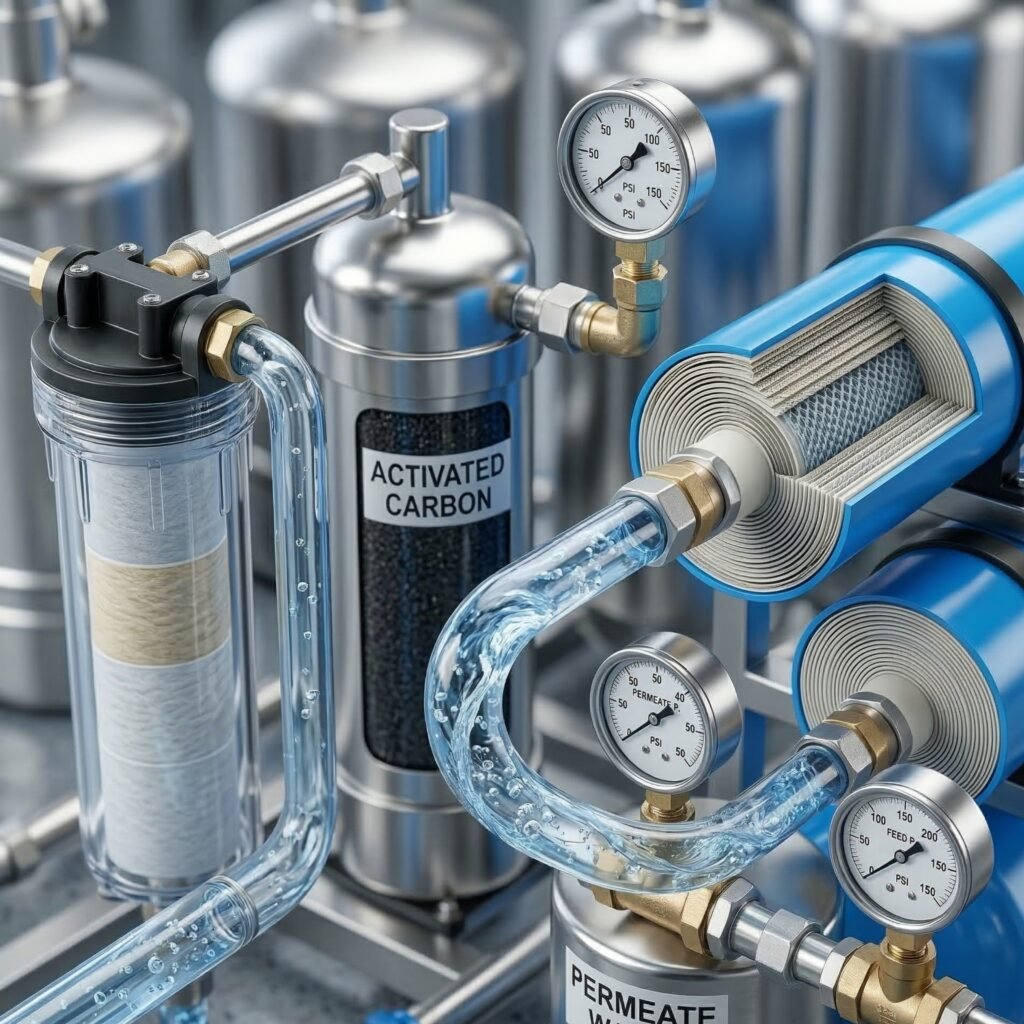
Chitradurga's Key Sectors and Water Treatment Requirements
Iron Ore Mining and Beneficiation
Chitradurga district has significant iron ore deposits – in the Challakere and surrounding areas – that feed into Karnataka’s mining and steel supply chain. Iron ore beneficiation (the process of improving iron ore grade through washing and concentration) is one of the most water-intensive industrial processes.
Ore washing and classification: Beneficiation plants wash iron ore to remove fine clay and silica gangue. Wash water quality – particularly its suspended solids content and chemical composition – affects beneficiation efficiency and product grade consistency.
Dust suppression: Mining operations require water for road dust suppression and drilling operations – large volumes of water at lower quality specifications.
Processing plant boilers: Where steam is used in beneficiation, boiler feed water treatment (softening and TDS reduction) is essential.
Workforce drinking water: Large mine workforces – under Factories Act and Mines Act obligations – require safe, treated drinking water. In Chitradurga’s fluoride-affected zones, providing fluoride-safe drinking water to mine workers is both a legal obligation and an ethical necessity.
DMF funding opportunity: As a mining-affected district, Chitradurga’s District Mineral Foundation (DMF) has funds specifically for welfare projects in mining-affected communities – including safe drinking water. Bangalore Aqua assists mining companies and gram panchayats in structuring community water projects eligible for DMF funding. See CSR community development water projects.
Typical requirement: Industrial RO 1,000–5,000 LPH for beneficiation plant process and workforce water; community water plants for mining-affected villages funded through DMF
Granite Quarrying and Stone Processing
Chitradurga district’s granite deposits – particularly in the Hiriyur, Holalkere, and Hosadurga taluks – support a significant granite quarrying and stone processing industry. Granite cutting and polishing operations use large volumes of water for cooling diamond wire saws and polishing machinery.
Cooling water for stone cutting: Diamond wire saws and angle grinders cutting granite require continuous water cooling. Water quality affects cutting efficiency and blade life – hard, mineral-rich water deposits scale on cutting equipment, reducing efficiency.
Polish slurry water: Granite polishing uses water mixed with abrasive compound. The rinse water quality affects final polish quality.
Typical requirement: Water softener for cutting and polishing machinery cooling water; commercial RO plant for workforce drinking water and FSSAI-compliant canteen water
Molakalmuru Silk Weaving – A GI-Protected Industry
Molakalmuru silk sarees carry Geographical Indication (GI) protection – among Karnataka’s prestigious GI-protected textile products alongside Mysuru silk. The Molakalmuru silk weaving tradition, practiced by hereditary weaver communities in the taluk, produces distinctive sarees for Karnataka’s premium gift and ceremonial market.
Silk dyeing – the most water-sensitive stage in saree production – requires water significantly purer than Molakalmuru’s fluoride-affected borewell supply:
- Fluoride in silk dyeing water: Fluoride above 1.0 mg/L affects the pH balance of silk dyeing baths, particularly for acid dyes used on silk. It can alter shade outcomes and reduce dye exhaustion efficiency.
- TDS in silk dyeing: High TDS water (above 200 mg/L) dilutes the dye concentration effect and creates bath chemistry instability.
- Iron in dyeing water: Trace iron causes metallic streaks in light shades and reduces fastness in yellow and beige shades.
An RO plant – addressing TDS, fluoride, and iron simultaneously – is the definitive water quality upgrade for Molakalmuru’s silk dyeing operations. With Bangalore Aqua’s industrial RO systems, Molakalmuru weavers can produce consistent, internationally competitive quality without the water quality variable undermining their premium product.
Typical requirement: Commercial or industrial RO 250–1,000 LPH for dyeing water; fluoride removal verification in NABL commissioning certificate
Pavagada Solar Park and Renewable Energy Sector
The Pavagada Solar Park – at 2,050 MW one of the world’s largest single-location solar power installations – and Chitradurga’s significant wind energy corridor represent a new industrial dimension in a traditionally mining-and-agriculture district.
Solar panel cleaning water: Large-scale solar installations require periodic panel cleaning to maintain power output – particularly critical in Chitradurga’s dusty semi-arid environment where panel soiling is a significant efficiency loss factor. Panel cleaning water must be pure (low TDS, low mineral content) to prevent TDS-related spotting that reduces panel efficiency even after cleaning.
Operations and maintenance facility water: O&M facilities at solar parks – with resident technical staff, maintenance workshops, and equipment testing – require safe drinking water and tool-cleaning water. In Pavagada’s fluoride-affected groundwater zone, an RO plant for the O&M facility provides safe drinking water and appropriate instrument-rinsing water simultaneously.
Typical requirement: Commercial RO plant 250–500 LPH for O&M facility; pure water supply for panel cleaning (low TDS essential)
Fluoride-Affected Village and Community Water Projects
This is Chitradurga’s most urgent and most distinctive water treatment requirement – and the one that separates Chitradurga from every other district in Karnataka’s water treatment landscape.
The documented health consequences of fluoride in Challakere, Pavagada, Molakalmuru, Hosadurga, and Kudligi – dental fluorosis in children, skeletal fluorosis in adults, arthritic symptoms in working-age community members – create a moral and public health imperative that industrial water treatment suppliers in this district cannot ignore.
Community RO plants providing fluoride-safe water to villages in these taluks are the most direct intervention available. Gram panchayats, NGOs, corporate CSR programmes, and government agencies can fund these installations through:
- District Mineral Foundation (DMF): Tier 1 spending on safe drinking water – eligible for mining district communities
- Tribal Sub-Plan (TSP): For SC/ST-dominated habitations in fluoride-affected zones
- Corporate CSR (Schedule VII): Safe drinking water – direct Schedule VII eligibility
- Jal Jeevan Mission water quality component: Where fluoride exceeds BIS limits, JJM funds water quality improvement sub-projects
Bangalore Aqua implements community water plants for fluoride-affected villages – complete with NABL water testing confirming pre- and post-treatment fluoride levels, Kannada-language operator training, and structured multi-year AMC. For Chitradurga’s fluoride-affected communities, the commissioning NABL certificate showing fluoride reduction from (say) 2.8 mg/L to 0.15 mg/L is the documented proof of impact that matters most.
See community RO water plant Karnataka and best community RO project plants for the complete community project framework.
Hospitals and Healthcare
Chitradurga’s healthcare infrastructure – district hospital, BIMS Medical College, and private hospitals – serves as the health hub for a large and medically underserved district. In Chitradurga’s fluoride-affected zone, hospital drinking water quality is a patient safety issue – hospitalised patients consuming high-fluoride water in a district hospital undermines clinical care.
Safe, RO-purified drinking water at Chitradurga’s hospitals, CSSD water softening, and where dialysis services exist, AAMI-compliant dialysis water, are the healthcare water treatment requirements. See hospital water treatment solutions.
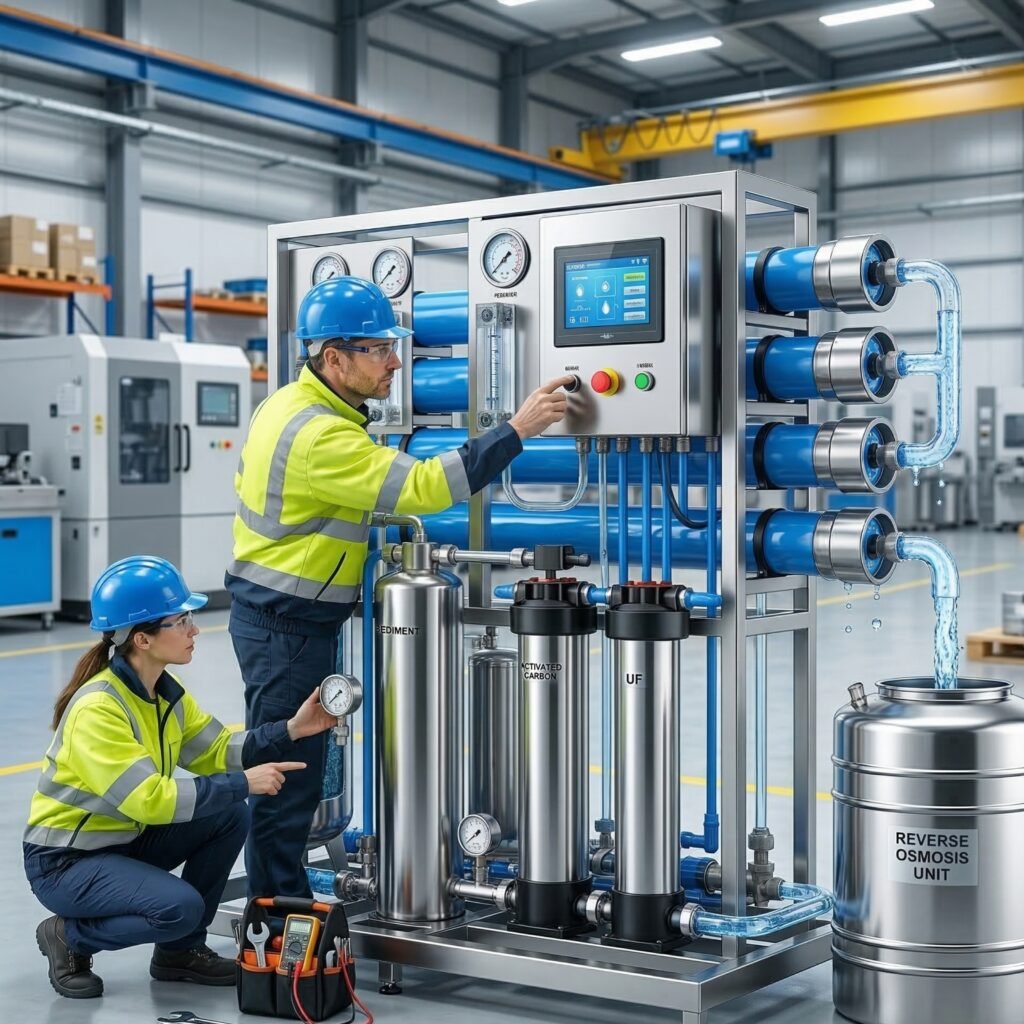
Industrial RO Plant Capacity and Pricing - Chitradurga
Capacity | Application | Daily Output | Indicative Cost |
250–500 LPH | Silk dyeing unit, small commercial | 2,000–5,000 L | ₹1.5–₅ lakh |
500–1,000 LPH | Community plant (1,000–3,000 people), small factory | 4,000–10,000 L | ₹4.5–₁2 lakh |
1,000–2,000 LPH | Medium mine workforce, hospital, large community | 8,000–20,000 L | ₹10–₂0 lakh |
2,000–5,000 LPH | Large mining operation, industrial township | 16,000–50,000 L | ₹20–₅5 lakh |
Chitradurga systems include fluoride removal verification as standard – NABL-certified pre- and post-treatment fluoride levels in every commissioning package. Contact Bangalore Aqua for a site-specific proposal after NABL water testing.
Pre-Treatment Configuration for Chitradurga
For standard Chitradurga borewell applications (moderate-high TDS, high hardness):
- Multimedia sediment filter
- Activated carbon filter
- Industrial water softener (Fleck or Clack, quality resin)
- Anti-scalant dosing
- 5-micron and 1-micron polishing cartridges
- Industrial RO plant – membrane selection optimised for high fluoride rejection (95–96%)
- UV disinfection
For community water plants in fluoride-affected villages:
- All above stages
- Enhanced UV dose (40+ mJ/cm²) for biological safety
- Post-RO fluoride verification in permeate (at commissioning and every annual NABL cycle)
- Kannada-language pictorial operation manual
- Solar power integration option for off-grid villages
For iron ore mining applications with elevated iron:
- Iron removal filter (greensand or Birm) upstream of softener
- Full standard pre-treatment train
- Robust pump specification for high-solids upstream environment
Coverage: Chitradurga District and Adjacent Areas
Within Chitradurga district: Chitradurga city | Challakere (mining, wind energy) | Molakalmuru (silk, fluoride zone) | Hosadurga | Holalkere | Hiriyur | Pavagada (solar park)
Adjacent district coverage:
- Davanagere – central Karnataka industrial
- Tumakuru – Bengaluru corridor
- Ballari – mining belt
- Chikballapur – eastern Karnataka
- Shivamogga – Western Ghats foothills
- Frequently Asked Questions
Our village in Challakere taluk has borewell fluoride of 3.2 mg/L. Our children have dental fluorosis. Can an RO plant fix this?
Yes – definitively. RO membranes reject 90–96% of fluoride. At 3.2 mg/L inlet fluoride, a properly operating RO plant produces permeate with fluoride of approximately 0.13–0.32 mg/L – well within the BIS safe limit of 1.0 mg/L. Dental fluorosis in children who have already developed it cannot be reversed, but consuming safe water immediately stops further fluoride accumulation and prevents new cases in younger children. Community RO plants funded through DMF, TSP, or corporate CSR are available for Challakere fluoride-affected villages. Contact Bangalore Aqua to discuss your village’s water project.
Our granite cutting plant in Hiriyur has hard water scale on our diamond wire cutting machines. What treatment do we need?
A water softener on your cutting machine cooling water supply removes the calcium and magnesium causing the scale. For Chitradurga’s granite quarrying zones with hardness of 250–500 mg/L as CaCO₃, a properly sized industrial water softener reduces hardness to below 20 mg/L – preventing scale formation on diamond wire, saw blades, and polishing machinery. Your cutting machine life increases, blade replacement intervals extend, and cutting efficiency improves. Contact Bangalore Aqua for a Hiriyur site assessment.
We are a CSR team at a Bengaluru company wanting to fund a fluoride-safe water plant in Chitradurga. How does Bangalore Aqua help?
Bangalore Aqua provides full CSR project implementation for Chitradurga’s fluoride-affected communities – from community needs assessment and NABL water testing (confirming the fluoride level and designing the appropriate system), through installation, community operator training in Kannada, and annual NABL water quality testing and impact reporting. Your CSR committee gets a complete project file with pre-treatment fluoride levels, post-treatment NABL certification confirming safe output, operator training records, and annual impact reports showing litres of safe water produced. DMF and TSP co-funding can sometimes supplement CSR funding for larger projects. See CSR community development water projects.
Our Molakalmuru silk dyeing unit is having shade variation problems and dye exhaustion issues. Could fluoride in our water be causing this?
Yes – fluoride above 1.0 mg/L affects the pH buffering behaviour of silk acid dye baths, contributing to shade variation and reduced exhaustion, particularly in light shades and pink/red ranges where bath chemistry sensitivity is highest. Combined with Molakalmuru’s typically elevated TDS (which also affects bath ionic strength), the water quality is a compounding variable in your shade consistency problem. A compact RO plant (250–500 LPH) removes fluoride, reduces TDS, and provides the stable, consistent water chemistry that premium silk dyeing requires. Contact Bangalore Aqua for a Molakalmuru silk dyeing unit assessment.
Can Bangalore Aqua provide solar-powered community RO plants for Chitradurga's off-grid fluoride-affected villages?
Yes – solar-powered community RO plants are a standard Bangalore Aqua offering for off-grid tribal and rural deployments. For Chitradurga’s fluoride-affected villages without reliable grid electricity, the solar integration includes a photovoltaic array sized for the plant’s duty cycle, lithium iron phosphate battery storage for 4–6 hours of cloudy-day operation, and IoT-based remote monitoring that alerts Bangalore Aqua’s service team if the plant goes offline – enabling proactive service dispatch rather than waiting for community report. Contact our project team for solar community plant specifications for your specific village.
Book Your Free Shivamogga Site Assessment
📞 +91 76763 93939 | +91 97387 04753 📧 info@bangaloreaqua.com 🌐 bangaloreaqua.com/ro-water-treatment-plant-supplier-in-shivamogga/ 📍 Manufacturing: 107/209 2nd Cross, 4th Main Kogilu Layout, Bengaluru – 560064
Free Shivamogga site assessment, NABL-accredited water quality testing, and a complete proposal – for industrial, commercial, institutional, and community water treatment projects.
About Bangalore Aqua | Our Karnataka presence | Gallery | Brochure
Also See:
- RO Water Treatment Plant Supplier Shivamogga
- Community RO Plants for Tribal Areas
- CSR and Community Development Water Projects
- RO Water Treatment Plant Chikkamagaluru
- Best Industrial RO Plant Manufacturer Bangalore
- Water Treatment Solutions for Hospitals
- Industrial & Commercial RO Plant AMC Services