Best Industrial RO Plant Manufacturer in Shivamogga (2026)
DRINK SAFE AND PURE
Bangalore Aqua - Industrial RO Plant Manufacturer for Shivamogga District
Shivamogga sits at a distinctive intersection in Karnataka’s geography – where the water-rich Western Ghats foothills meet the more water-stressed Deccan Plateau, where the world’s largest arecanut wholesale market meets one of Karnataka’s significant paper manufacturing traditions, and where tribal forest communities with no safe water access share a district with a growing steel and industrial corridor.
This diversity – agricultural processing at world scale, paper manufacturing, iron and steel, healthcare and education, and some of Karnataka’s most water-vulnerable tribal communities in the forest interior – creates a water treatment market in Shivamogga that is as varied as the district’s geography.
Bangalore Aqua and Energy Pvt. Ltd. serves Shivamogga district’s full industrial, commercial, institutional, and community water treatment requirements – manufacturing industrial RO systems, commercial RO plants, community water plants, and water softeners from our Bengaluru facility with committed Karnataka-wide field service.
📞 +91 76763 93939 | +91 97387 04753 📧 info@bangaloreaqua.com 🌐 bangaloreaqua.com/ro-water-treatment-plant-supplier-in-shivamogga/
Shivamogga's Water Quality: Better Than North Karnataka, But Not Without Challenges
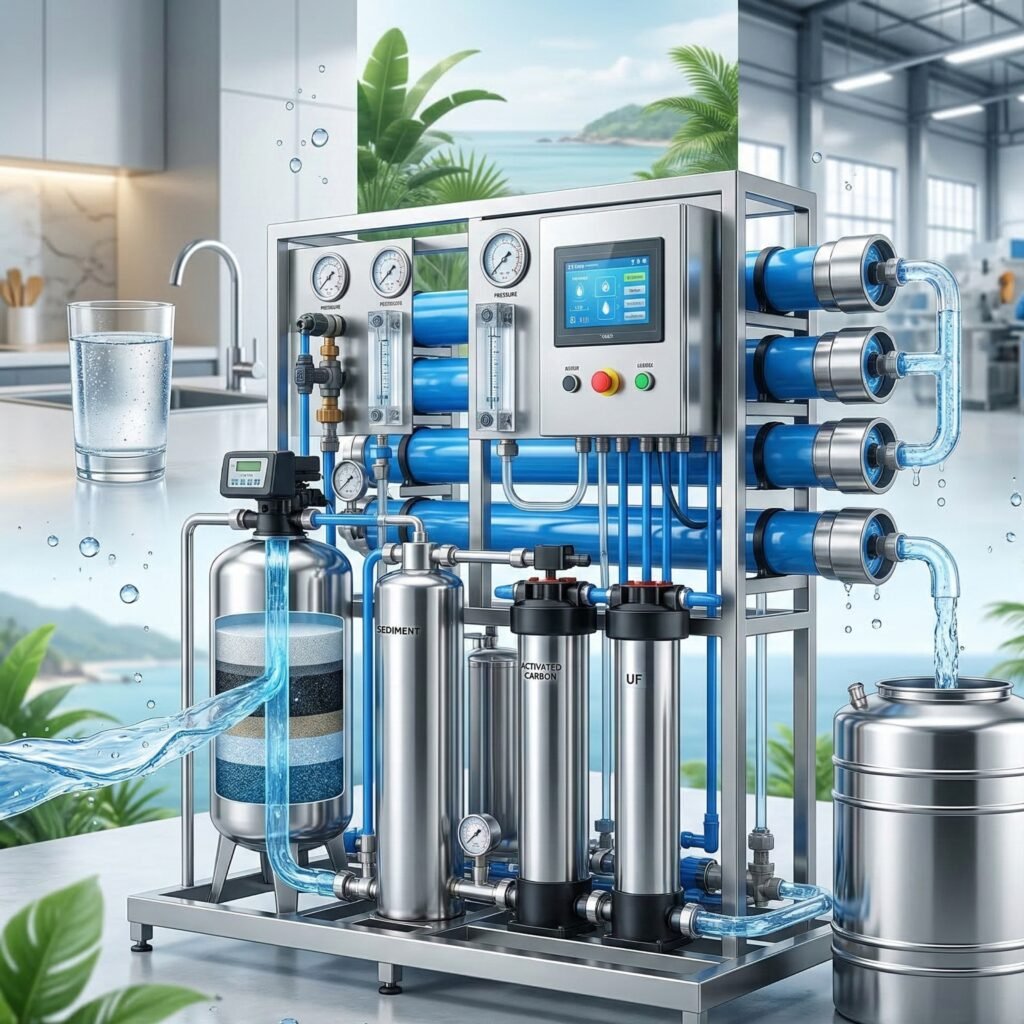
Shivamogga’s position at the Western Ghats foothills gives it a different water quality profile from North Karnataka’s fluoride-affected arid districts or Bengaluru’s high-TDS borewell zones.
Municipal supply from the Tunga River: Shivamogga city draws municipal water from the Tunga River – relatively soft, low-to-moderate TDS water that serves much of the urban population with better baseline water quality than most Karnataka cities. Municipal TDS is typically 100–250 mg/L.
However – industrial and rural borewell reality:
The municipal supply picture for Shivamogga city masks a more complex reality across the district’s industrial zones and rural areas:
Industrial zone borewell dependence: KIADB industrial estates in Shivamogga district and the larger processing facilities (arecanut processors, coffee processors, paper manufacturing ancillaries) draw from borewells when municipal supply is insufficient for process volumes. Shivamogga district borewell water – in areas away from the river recharge zones – can show TDS of 300–800 mg/L and hardness of 150–400 mg/L as CaCO₃.
Forest and tribal area water quality: The interior Western Ghats zone of Shivamogga district – home to significant Scheduled Tribe communities in Sorab, Sagar, Hosanagara, and the forest border taluks – faces a very different water challenge. Surface springs and seasonal streams used by tribal communities carry bacteriological risk from forest animal activity and agricultural runoff. This is a biological safety challenge more than a dissolved mineral challenge – UV disinfection alone is inadequate; RO treatment with pre-filtration and UV is needed for comprehensive safety.
Coffee estate and plantation water: Plantation areas in Thirthahalli, Sagara, and Hosanagara taluks draw from estate borewells that carry moderate TDS and varying hardness depending on the underlying geology. Coffee processing requires clean water for washing and fermentation – contaminant-free water is essential for export-quality coffee quality.
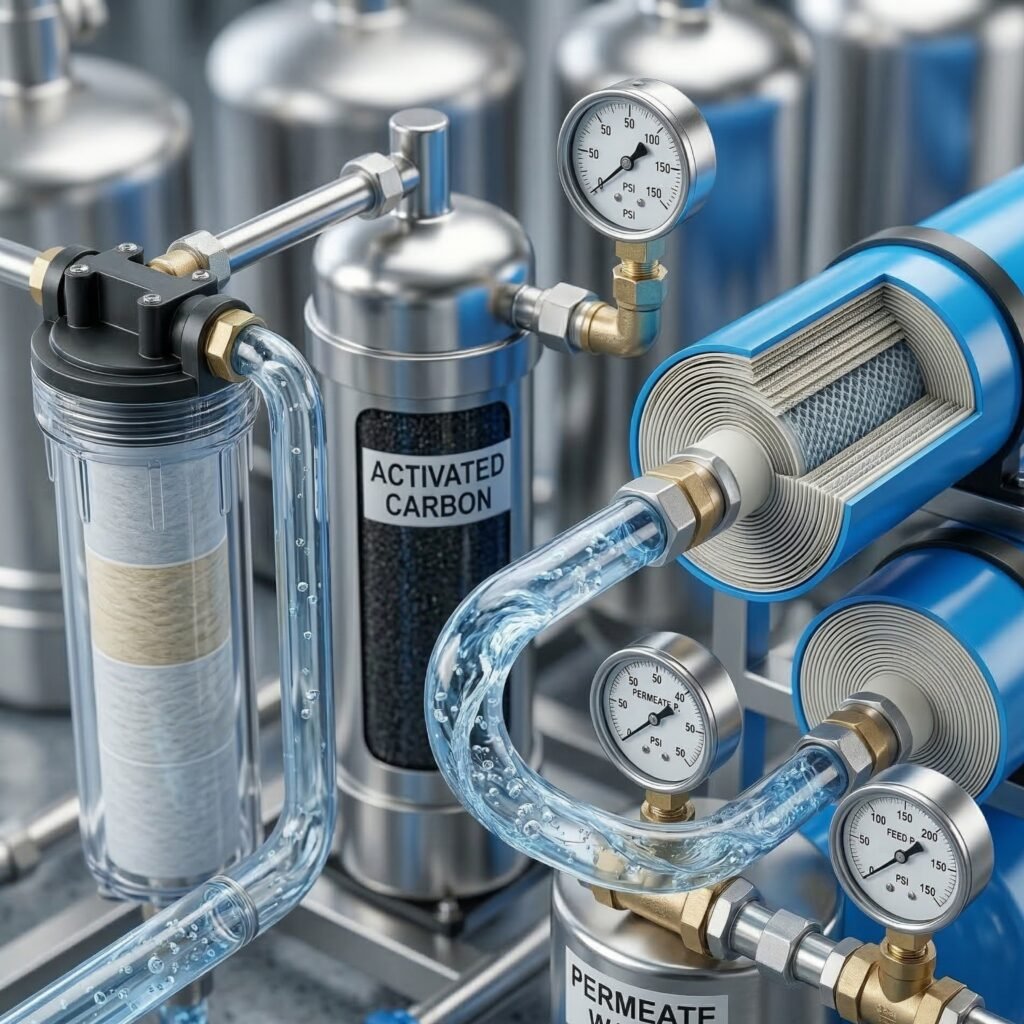
Shivamogga's Key Sectors and Water Treatment Requirements
Arecanut Processing – The World’s Largest Market
Shivamogga’s Shimoga Market (Santhe) is reputedly the world’s largest arecanut (supari) wholesale market – the centre of the Karnataka arecanut trade that is one of the state’s most significant agricultural commodity industries. Arecanut processing – washing, boiling, drying, and curing of areca nuts – uses large quantities of water.
Processing water requirements: Arecanut boiling operations use large volumes of water heated to high temperatures. The water quality affects the final product’s colour, texture, and flavour – and FSSAI food safety regulations require safe, potable process water for all food processing operations.
Scale of water use: A medium-scale arecanut processing unit handling 5–10 tonnes per day uses 5,000–20,000 litres of water in the washing and boiling process. Water hardness affects the boiling efficiency and can deposit scale on boiling vessels – reducing heat transfer efficiency and increasing fuel costs.
Typical requirement: Commercial or industrial RO plant 500–2,000 LPH for process and drinking water; water softener for boiling vessels protection; FSSAI food processing compliance documentation
Coffee Processing and Plantation Industry
The Thirthahalli, Sagara, and Hosanagara taluks of Shivamogga district are on the fringe of Karnataka’s coffee growing zone – with coffee estates and wet processing (pulping, washing, fermentation) operations in the Western Ghats foothills.
Wet-processed coffee – the “washed” processing method that produces premium specialty coffee – requires clean, low-TDS water for the washing and fermentation stages. Water quality in wet processing directly affects coffee flavour profile. Off-flavours from iron-bearing water or bacterially contaminated water compromise the premium quality that export buyers pay for.
Typical requirement: Commercial RO plant 100–500 LPH for processing water; iron removal where borewell iron is elevated; FSSAI compliance documentation for food processing
Paper Manufacturing and Related Industry
The broader Shivamogga-Uttara Kannada industrial corridor (which includes West Coast Paper Mills at Dandeli, approximately 120 km from Shivamogga city) is one of Karnataka’s paper industry zones. While the major paper mills are technically in Uttara Kannada district, the supply chain, workforce residential base, and ancillary processing operations extend into Shivamogga district.
Paper manufacturing is one of the most water-intensive industrial processes – requiring treated water for pulp processing, cooling, and the steam systems that drive the paper drying process. Water hardness causes scale in paper machine heat exchangers and reduces pulping efficiency. Industrial RO and water softening systems for paper industry applications are sized at the larger end of the commercial/industrial range.
Typical requirement: Industrial water softener for boiler and process water; industrial RO 2,000–5,000 LPH for process-sensitive applications; cooling tower makeup water treatment
Iron and Steel and Manufacturing
Shivamogga district’s growing industrial base – including engineering workshops, light steel fabrication, and manufacturing units in the KIADB industrial estates – requires water treatment for cooling, process operations, and workforce welfare.
Steel-related cooling systems – cooling towers for induction furnaces and quenching operations – are particularly sensitive to hardness, which causes scale on cooling equipment. Softened makeup water, ideally with chemical inhibitor dosing, protects cooling infrastructure and maintains heat exchange efficiency.
Typical requirement: Industrial water softener for cooling system makeup; industrial RO plant for workforce drinking water and sensitive process water; community water plant for worker township
Hospitals and Healthcare (McGann Hospital, MRIMS, District Hospital)
Shivamogga’s healthcare infrastructure – McGann District Hospital, Manipal’s Shivamogga presence, and private hospitals serving as the healthcare hub for the Malnad-Shivamogga region – requires standard healthcare water treatment including drinking water RO, CSSD water softening, and in larger facilities, dialysis water treatment.
For NABH accreditation and clinical safety documentation, Bangalore Aqua provides the complete healthcare water treatment system and NABH-compatible documentation package. See hospital water treatment solutions.
Western Ghats Tribal Community Water Projects
This is where Shivamogga stands uniquely among Karnataka’s industrial cities in Bangalore Aqua’s service portfolio. The interior Western Ghats taluks of Shivamogga district – Sorab, Sagar, Hosanagara, and the forest-border areas – are home to tribal communities (including Soliga and other forest-dwelling ST communities) with documented safe water access challenges.
Tribal haadis in these areas face:
- Seasonal surface water sources with bacteriological contamination
- Limited groundwater access due to forest regulations on borewell drilling
- Geographic isolation that makes conventional water infrastructure expensive and government installation difficult to maintain
Community RO plants designed for tribal area deployment – compact, solar-powered where grid electricity is absent, with pictorial Kannada-language operator training – are the technology solution that Bangalore Aqua has implemented for tribal communities across Karnataka’s forest districts.
For Shivamogga district’s tribal community water projects – whether funded through Tribal Sub-Plan (TSP) funds, corporate CSR, or NGO grants – Bangalore Aqua provides full turnkey implementation including NABL water testing, installation, and multi-year AMC.
Jog Falls Tourism and Hospitality
Jog Falls – one of India’s most celebrated waterfalls and a significant Karnataka tourism destination – draws visitors year-round to the Sagara taluk of Shivamogga district. The tourism infrastructure around Jog Falls: hotels, resorts, the KSTDC (Karnataka State Tourism Development Corporation) accommodation, and local hospitality establishments.
For hospitality properties serving Jog Falls visitors, commercial RO water treatment is the standard for drinking water safety and FSSAI compliance in food service operations.
Typical requirement: Commercial RO plant 100–500 LPH for hospitality and food service; water softener for guest bathroom and laundry quality
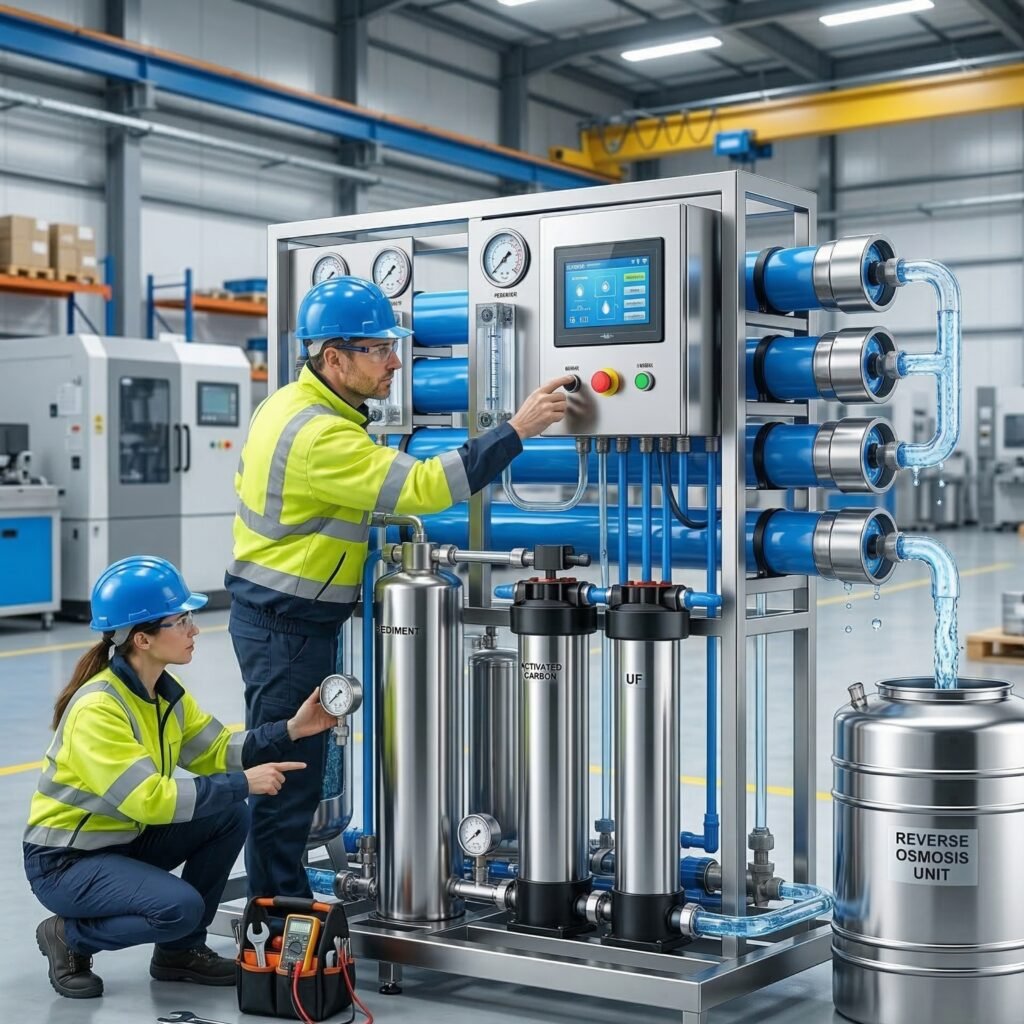
Industrial RO Plant Capacity and Pricing - Shivamogga 2026
|
Capacity |
Application |
Daily Output |
Indicative Cost |
|
100–250 LPH |
Small commercial, clinic, tourism property |
800–2,500 L |
₹55,000–₁.5 lakh |
|
250–500 LPH |
Arecanut processor, restaurant, office |
2,000–5,000 L |
₹1.5–₄ lakh |
|
500–1,000 LPH |
Coffee processor, medium factory, hospital |
4,000–10,000 L |
₹4–₁0 lakh |
|
1,000–2,000 LPH |
Large arecanut processor, large hospital, campus |
8,000–20,000 L |
₹8–₁8 lakh |
|
2,000–5,000 LPH |
Large industrial campus, paper mill auxiliary |
16,000–50,000 L |
₹18–₅0 lakh |
Community plants for tribal area deployment: ₹3–₁5 lakh depending on capacity and solar integration. Contact Bangalore Aqua for a Shivamogga-specific proposal after NABL water testing.
Pre-Treatment Configuration for Shivamogga
Given the range of water sources across Shivamogga district, the pre-treatment configuration varies by source:
For Tunga River municipal supply (Shivamogga city):
- Carbon filtration (for residual chlorine)
- 5-micron and 1-micron sediment cartridges
- Anti-scalant dosing (mild hardness management)
- RO plant
For district borewell sources (industrial zones, rural areas):
- Multimedia sediment filter
- Carbon filtration
- Water softener (for moderate-to-high hardness)
- Anti-scalant dosing
- Cartridge pre-filters
- RO plant + UV disinfection
For Western Ghats tribal area surface/spring water:
- Turbidity pre-treatment (coagulation/flocculation for high-turbidity monsoon sources)
- Multimedia sediment filtration
- Carbon filtration
- 5-micron and 1-micron cartridges
- RO with enhanced UV dose (40+ mJ/cm² for higher biological load surface water)
- Solar power integration for off-grid tribal locations
Serving All of Shivamogga District and Adjacent Areas
Within Shivamogga district: Shivamogga city | Sagara | Sorab | Hosanagara | Thirthahalli | Shikaripura | Bhadravathi | Channagiri
Adjacent district coverage:
- Chikkamagaluru – coffee and plantation, Western Ghats
- Davanagere – central Karnataka industrial
- Uttara Kannada / Karwar – coastal and forest zone
- Chitradurga – eastern Shivamogga border
Adjacent District Coverage from the Dharwad Service Hub
Bangalore Aqua’s Dharwad service coverage extends to the full North Karnataka region:
- Hubballi – see Hubballi RO plant supplier
- Gadag – see Gadag RO plant supplier
- Belagavi – see Belagavi RO plant supplier
- Haveri – agricultural and light industrial
- Bagalkot – see Bagalkot RO plant supplier
- Uttara Kannada (Karwar) – see Uttara Kannada RO plant page
- Frequently Asked Questions
Our arecanut processing unit in Shivamogga needs water for boiling and washing. Our borewell water leaves deposits on the boiling vessels. What do we need?
The deposits are calcium carbonate (limescale) from your borewell’s hardness – hardness above 150 mg/L as CaCO₃ will accumulate on heated vessel surfaces over time, reducing heat transfer efficiency and increasing fuel costs. A water softener on the incoming water supply removes the calcium and magnesium causing this scale. For your process and drinking water, an industrial RO plant downstream of the softener produces FSSAI-compliant process water with low TDS and zero hardness. Contact Bangalore Aqua for a Shivamogga arecanut unit site assessment and water test.
We run a coffee estate in Thirthahalli. Can water quality affect our specialty coffee quality?
Yes – significantly. Wet-process specialty coffee (washed process) is highly sensitive to washing water quality. Iron above 0.3 mg/L in washing water can introduce metallic off-flavours. Bacterially contaminated washing water can cause fermentation issues. For export-quality specialty coffee, clean, low-TDS water for the washing and fermentation stages improves cup quality consistency. A compact commercial RO plant (100–250 LPH) with iron removal pre-treatment provides the clean process water your premium coffee deserves.
We are an NGO implementing tribal water projects in Hosanagara taluk. Can Bangalore Aqua help with solar-powered RO plants for remote haadis?
Yes – this is a project type Bangalore Aqua has implemented across Karnataka’s forest districts. For Hosanagara tribal haadis with surface water sources (springs, seasonal streams), the system includes turbidity pre-treatment, RO with enhanced UV, solar power integration, and operator training in Kannada using pictorial checklists. Community size typically determines plant capacity (100 LPH for small haadis of 80–150 people; 250 LPH for 150–400 people). Funding can be structured through TSP, NGO grants, or CSR. See community RO plants for tribal areas for the complete framework.
Does Bangalore Aqua handle community water projects for Jog Falls tourism area villages that lack safe water?
Yes – the Sagara taluk villages surrounding the Jog Falls area, including tribal and forest fringe communities, are within Bangalore Aqua’s community project service scope. Contact our project team with the specific community size and current water source details. We arrange NABL water testing, design the appropriate system (RO vs UV based on contamination profile), and implement with operator training and AMC.
What is the service response time for Shivamogga from Bangalore Aqua?
Shivamogga is approximately 270–280 km from Bengaluru via NH-75 (Davangere–Shivamogga highway) – approximately 4–4.5 hours. For AMC customers in Shivamogga, quarterly field service visits are scheduled efficiently. Emergency parts dispatch from Bengaluru reaches Shivamogga next-working-day by courier; field engineer dispatch for urgent industrial emergencies is within 24 hours. Remote troubleshooting support (phone/WhatsApp/video) is available immediately for any urgency.
Book Your Free Shivamogga Site Assessment
📞 +91 76763 93939 | +91 97387 04753 📧 info@bangaloreaqua.com 🌐 bangaloreaqua.com/ro-water-treatment-plant-supplier-in-shivamogga/ 📍 Manufacturing: 107/209 2nd Cross, 4th Main Kogilu Layout, Bengaluru – 560064
Free Shivamogga site assessment, NABL-accredited water quality testing, and a complete proposal – for industrial, commercial, institutional, and community water treatment projects.
About Bangalore Aqua | Our Karnataka presence | Gallery | Brochure
Also See:
- RO Water Treatment Plant Supplier Shivamogga
- Community RO Plants for Tribal Areas
- CSR and Community Development Water Projects
- RO Water Treatment Plant Chikkamagaluru
- Best Industrial RO Plant Manufacturer Bangalore
- Water Treatment Solutions for Hospitals
- Industrial & Commercial RO Plant AMC Services