
There’s a lot of confusion about RO water. Some people swear by it. Others worry it’s not healthy. Many don’t understand how it actually works. At Bangalore Aqua, we’ve seen these questions repeatedly, and we decided to create this comprehensive guide to answer all your questions about RO water.
Whether you’re considering getting an RO system, you already have one and want to understand it better, or you’re just curious about what RO water actually is – this guide has everything you need to know.
What Exactly Is RO Water? Understanding Reverse Osmosis
Let’s start with the basics. RO stands for Reverse Osmosis. But what does that actually mean?
In simple terms, RO is a water purification process that removes dissolved substances from water by forcing it through a semi-permeable membrane. Think of it like a very fine filter that lets water molecules through but blocks most other things.
Here’s how it works:
Your tap water contains dissolved minerals, chemicals, salts, and potentially harmful substances. When this water is forced through an RO membrane at high pressure, the water molecules are small enough to pass through, but most of the dissolved substances are too large. They get blocked and flow away as waste water, while the purified water comes out the other side.
The result is water that’s had approximately 95-99% of dissolved impurities removed. It’s remarkably effective and proven technology that’s been used for decades.
The Science Behind RO Water
The RO process works based on osmosis – a natural process where water molecules move from an area of lower concentration of dissolved substances to an area of higher concentration, trying to balance things out. Reverse osmosis reverses this natural process by applying pressure, forcing water to move from an area of higher concentration of dissolved substances to an area of lower concentration.
The semi-permeable membrane used in RO systems is engineered at a molecular level. It has tiny pores – about 0.0001 microns – that allow water molecules (which are about 0.0003 microns) to pass through, but block larger molecules like minerals, salts, bacteria, viruses, and chemical contaminants.
Why It’s Called Reverse Osmosis
The term “reverse osmosis” comes from the fact that it reverses the natural osmosis process. In normal osmosis, water moves toward salt. In reverse osmosis, we use pressure to force water away from salt, which is the opposite of what naturally wants to happen.
How Does RO Water Treatment Work? The Complete Process
Understanding how your RO system works helps you appreciate what it’s doing and maintain it properly.
Stage 1: Pre-Filtration
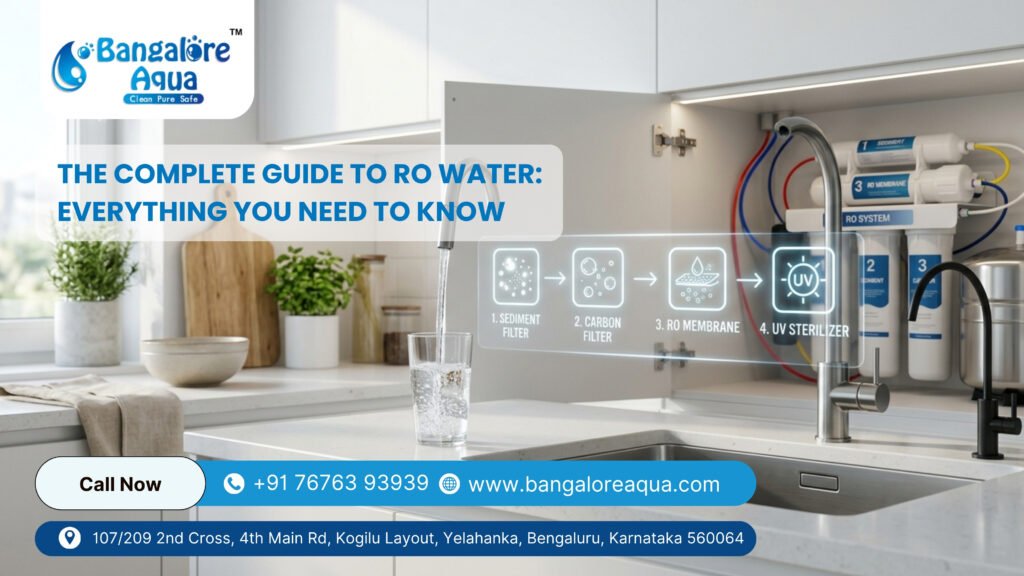
Before water reaches the RO membrane, it goes through pre-filtration stages. These typically include:
Sediment Filter – Removes visible particles, sand, silt, and dust. This protects the more expensive RO membrane from physical damage.
Activated Carbon Filter – Removes chlorine, odor, taste issues, and some organic chemicals. This is important because chlorine can damage the RO membrane.
These pre-filters usually need replacement every 3-6 months depending on your water quality and usage.
Stage 2: High-Pressure Pump
The pre-filtered water is then pushed through a high-pressure pump. This pump is crucial – it creates the pressure needed to force water through the RO membrane against the natural osmotic pressure. Without adequate pressure, the membrane won’t work effectively.
Stage 3: RO Membrane Filtration
This is where the magic happens. Water is forced through the semi-permeable membrane under pressure. Pure water passes through to one side (the permeate), while dissolved substances are forced to the other side (the concentrate or waste water).
This is the most critical stage – the RO membrane is what actually purifies your water.
Stage 4: Post-Filtration
In many systems, especially better quality ones, the purified water passes through one more stage before storage. This might be an activated carbon polishing stage or a mineralizing stage (in alkaline RO systems) that adds beneficial minerals back.
Stage 5: Storage Tank
Purified water is stored in a clean tank until you need it. The tank is typically food-grade and designed to maintain water quality.
Stage 6: Final Dispensing
When you open your RO tap, the stored pure water comes out. Many systems include a quick-connect faucet for easy use.
Is RO Water Safe to Drink? What the Science Says
This is one of the most common questions we hear. The answer is absolutely yes – RO water is completely safe to drink daily.
What RO Water Removes
RO systems effectively remove:
Bacteria and viruses (99.99% removal)
Dissolved minerals causing hardness (calcium, magnesium)
Heavy metals (lead, mercury, arsenic, cadmium)
Pesticides and herbicides
Chemical contaminants
Salts and sodium
Fluoride
Chlorine and chlorine byproducts
Most organic compounds
Essentially, RO removes almost everything dissolved in water except water molecules themselves.
The Demineralized Water Concern
Some people worry that RO water is demineralized and therefore unhealthy. Let’s address this directly: the concern about RO water lacking minerals is overstated.
While it’s true that RO removes minerals from water, here’s the important context:
Most of your mineral intake comes from food, not water. Your body gets calcium from dairy, vegetables, and other foods. You get magnesium from nuts, whole grains, and vegetables. The minerals in water contribute very little to your daily intake.
Even if you drink RO water exclusively, as long as you eat a normal diet, you get plenty of minerals. Studies haven’t found any health problems from drinking demineralized water.
Many countries use demineralized water regularly without health issues. People using RO water have no higher rates of mineral deficiency than anyone else.
If you’re still concerned, alkaline RO systems add back beneficial minerals while removing harmful substances – best of both worlds.
What Health Authorities Say
The World Health Organization recognizes RO as an effective water purification method. The US EPA approves RO systems for water treatment. Major health organizations worldwide acknowledge RO water as safe for daily consumption.
The only caution from health authorities is that RO removes all minerals, including some beneficial ones. But as discussed above, this isn’t a practical health concern for people eating normal diets.
What Are the Benefits of RO Water?
If RO water is safe, what’s the actual benefit of drinking it instead of tap water?
Benefit 1: Removes Harmful Contaminants
In many areas, tap water contains contaminants that RO effectively removes. These might include:
Heavy metals from old pipes
Pesticides from agricultural runoff
Industrial chemicals
Excess fluoride in some regions
Bacteria or viruses in compromised water systems
Chlorine and chlorine byproducts
Removing these protects your long-term health
Benefit 2: Better Taste and Smell
Many people’s main complaint about tap water is the taste and smell. Chlorine, minerals, and other dissolved substances create unpleasant tastes and odors. RO removes these, resulting in clean, fresh-tasting water.
For many people, this alone is worth having an RO system – they drink more water when it tastes better, which supports overall health.
Benefit 3: Protects Appliances
Hard water damages appliances. Scale buildup from minerals affects:
Water heaters (reducing efficiency and lifespan)
Washing machines
Dishwashers
Coffee makers
Kettles
RO water prevents this mineral buildup, extending appliance life and reducing maintenance costs.
Benefit 4: Better for Cooking
Professional chefs use purified water for cooking. RO water makes better tea, better coffee, better soup, better everything that requires water. You’ll notice the difference.
Benefit 5: Cleaner Skin and Hair
Some people report cleaner skin and shinier hair after switching to RO water. This might be because dissolved minerals and chlorine are removed. Whether it’s a major benefit or not, it’s an appreciated side effect.
Benefit 6: Peace of Mind
Perhaps the biggest benefit is knowing your water is pure. You know what’s in your water because you controlled the treatment process. For families concerned about water safety, this peace of mind is invaluable.
What Are the Drawbacks of RO Water?
RO systems aren’t perfect. Let’s discuss the real drawbacks honestly.
Drawback 1: Waste Water Production
RO systems produce waste water. For every liter of pure water created, typically 2-3 liters of waste water are created. This seems wasteful, but:
The waste water can be used for cleaning, gardening, toilet flushing
Modern RO systems are more efficient than older ones
It’s still more efficient than buying bottled water
This is the most legitimate drawback of RO systems
Drawback 2: Requires Electricity
RO systems need electricity to run the pump. This means:
They don’t work during power outages
There’s an ongoing electricity cost (though modest – usually ₹150-₹300/month)
You need proper electrical connections
Drawback 3: Initial Cost
Quality RO systems cost money upfront. Good residential systems cost ₹15,000-₹42,000. This is significant for some families.
However, when you calculate the cost over 5-10 years and compare it to bottled water, RO systems become cost-effective within 8-15 months for most people.
Drawback 4: Maintenance Required
RO systems need maintenance. Filters require replacement:
Sediment filters every 3-6 months
Carbon filters every 6-12 months
RO membranes every 2-3 years
Professional service is recommended quarterly
This ongoing maintenance is necessary for the system to work properly.
Drawback 5: Space Requirements
RO systems take up space under the sink or require a separate storage tank. They’re not huge, but they’re not invisible either.
RO Water vs. Other Water Treatment Methods: How Does It Compare?
You have options for water treatment. How does RO compare?
RO vs. Boiling
Boiling removes bacteria and viruses but does nothing about dissolved minerals, chemicals, or heavy metals. RO is much more effective at removing harmful substances.
RO vs. Water Softening Alone
Water softeners remove hardness but don’t remove other contaminants. RO removes hardness plus everything else. RO is more comprehensive.
RO vs. Activated Carbon Filters
Carbon filters improve taste and remove chlorine but don’t remove dissolved minerals or many chemical contaminants. RO is much more thorough.
RO vs. Distillation
Distillation removes almost everything by boiling water and collecting the steam. It works but uses massive amounts of electricity. RO is more energy-efficient.
RO vs. UV Water Treatment
UV kills bacteria and viruses but removes nothing else dissolved in water. UV and RO are complementary – many systems use both for maximum protection.
RO with Additional Stages
The most comprehensive approach combines RO with:
Pre-filtration (removes sediment and chlorine)
UV sterilization (additional microbial protection)
Water softening (if hardness is extreme)
Alkaline mineralization (if you want minerals back)
This is the approach many high-quality systems take.
Common RO Water Myths Debunked
Myth 1: RO Water is Unhealthy Because It’s Demineralized
We’ve addressed this already, but it’s worth repeating: demineralized water from RO isn’t unhealthy. Your food provides minerals. Millions of people drink RO water with no health issues.
Myth 2: RO Removes Beneficial Substances
While RO removes minerals, those minerals in water aren’t typically “beneficial” in the way food minerals are. You get far more minerals from food than water.
Myth 3: RO Systems Are Too Expensive
While initial cost is significant, RO systems pay for themselves within 8-15 months compared to bottled water. Over 5-10 years, they’re far cheaper than any alternative.
Myth 4: RO Water Tastes Flat
Some people initially perceive RO water as tasting flat because they’re used to chlorine and mineral tastes. This usually changes after a few days as their taste buds adjust. Most people then prefer RO water taste.
Myth 5: RO Systems Require No Maintenance
Regular maintenance is essential for RO systems to work properly. Filters must be replaced on schedule, or water quality suffers and the membrane can be damaged.
How to Choose an RO System for Your Home
If you’ve decided RO water is right for you, how do you choose a system?
Step 1: Test Your Water
Get your water tested to understand what you’re dealing with. TDS levels, hardness, specific contaminants – these determine what system you need.
Step 2: Calculate Your Daily Need
How much pure water do you need daily? A typical family needs 15-25 liters. Choose a system that can provide this.
Step 3: Consider Your Space
Where will the system go? Under the sink? In a utility room? Space limitations might affect your choices.
Step 4: Compare Options
Look at different systems. Consider:
Quality of components
Warranty length
Maintenance costs
Service availability in your area
Price
Step 5: Choose a Reputable Supplier
Work with a company that:
Does water testing before recommending
Explains their recommendations
Provides professional installation
Offers good warranty
Has responsive after-sale service
Has positive customer reviews
RO Water and Environmental Considerations
The waste water from RO systems is a legitimate environmental concern. Here are ways to minimize it:
Use waste water for gardening, cleaning, or toilet flushing
Choose more efficient modern systems (newer systems waste less)
Use smaller capacity systems if possible
Ensure proper maintenance – deteriorating systems waste more water
Consider dual-stage RO systems that are more efficient
While RO water production creates waste water, it’s still more sustainable than continuously buying bottled water.
The Future of RO Water Technology
RO technology continues improving:
Membranes are becoming more efficient, wasting less water
Automated monitoring systems track water quality
Hybrid systems combine RO with other technologies
Energy-recovery systems reduce pump power needs
Alkaline and mineral-adding stages address demineralization concerns
Technology is addressing the historical drawbacks of RO systems.
Final Thoughts: Is RO Water Right for You?
RO water is safe, effective, and beneficial for most people. Whether it’s right for you depends on:
Your water quality (worse water, more benefit from RO)
Your concerns about water safety
Your budget (worth it in 8-15 months for most people)
Your environmental consciousness (waste water concerns)
Your space availability (some systems are compact)
If you’re concerned about water quality, want better-tasting water, or worry about contaminants – RO water is an excellent solution. If your tap water is excellent quality and you’re not concerned about anything – you might not see as much benefit.
For most Indian families and businesses, RO water treatment is a worthwhile investment that protects health, improves water taste, and extends appliance life.
At Bangalore Aqua, we’ve installed over 500 RO systems throughout Karnataka. We’ve seen the real difference quality water treatment makes in people’s lives. We’re confident RO water is the right choice for most households.
Ready for Pure Water? Contact Bangalore Aqua
If you’ve decided RO water is right for you, or you want to explore whether it is, contact us for a free water quality assessment. We’ll test your water, explain what we find, and recommend the right solution for your situation.
Multiple Service Centers Throughout Karnataka
Call or Text [ +91 76763 93939, +91 97387 04753 ]
Website: bangaloreaqua.com
Email: [info@bangaloreaqua.com]
Free Water Quality Testing & Consultation
Pure Water. Pure Health. Pure Responsibility.
© 2026 Bangalore Aqua – RO Water Treatment Experts