Best Industrial RO Plant Manufacturer in Chikkaballapur (2026)

DRINK SAFE AND PURE

Bangalore Aqua - Industrial RO Plant Manufacturer for Chikkaballapur District

Chikkaballapur (Chikballapur / Chikkaballapura) sits on Bengaluru’s northern doorstep – sericulture and vineyards on one side, expanding KIADB corridors at Chikkaballapur, Gowribidanur and Masthenahalli on the other (Invest Karnataka – Chikkaballapur). Factories, food and textile units, granite and steel-linked MSMEs, highway hotels, and institutions across Chintamani, Sidlaghatta and Gauribidanur all need process and drinking water that does not inherit whatever the nearest bore happens to carry that season.

It is also a district where groundwater quality is a documented public-health and industrial design issue. Published taluk studies have repeatedly flagged elevated fluoride in urban and rural samples and nitrate exceedances in parts of the rural belt – enough that “install any RO” without a lab report is bad engineering.

Bangalore Aqua and Energy Pvt. Ltd. manufactures industrial RO plant manufacturer Chikkaballapur, commercial plants and community water solutions from our Bengaluru facility – with installation, commissioning and AMC across Chikkaballapur district.

📞 +91 76763 93939 | +91 97387 04753
📧 info@bangaloreaqua.com
🌐 bangaloreaqua.com | Related: Best RO Water Treatment Plant Supplier in Chikballapur

Chikkaballapur’s Water Quality: Fluoride, Nitrate and Plot-by-Plot Bore Chemistry

Why this district is not a generic “hard water” page

Many Karnataka districts share hardness and TDS problems. Chikkaballapur’s published record adds a sharper driver: fluoride in a large share of sampled wells, plus nitrate risk in parts of the rural taluk – with children shown at higher non-carcinogenic risk in health-assessment work (TQEM health-risk study; Deccan Herald summary).

Water softeners do not remove fluoride. UV does not remove fluoride. Reverse osmosis – when designed for the measured feed – is the practical path to bring fluoride and dissolved solids down for drinking and many process uses. That is why industrial and community RO manufacturing for Chikkaballapur must start with chemistry, not with a price list.

What published studies report (ranges – then re-test your bore)

Chikkaballapura taluk WQI (2019): many urban and rural samples fell in poor WQI bands; elevated fluoride reported in named gram panchayats (including Thippanahalli, Doddapailagurki, Poshettihalli, Kuppahalli, Mandikal, Ajjivara) and elevated nitrate in places such as Addagallu and Manchanabele (AJWEP / DOI).

Post-monsoon health-risk sampling: roughly 40-41% of urban/rural samples above BIS fluoride guidance used in that study, and about 17% of rural samples above nitrate 45 mg/L (TQEM DOI).

Broader district / aquifer notes: NAQUIM-linked and related work has reported a large share of samples exceeding fluoride limits, with maxima above 3 mg/L in parts of the district (e.g. Bagepalli aquifer notes in published IJRET material) – treat as zone-specific.

CSR context for fluoride villages paired with Kolar: Best CSR Project RO Plants.

We do not invent a single “Chikkaballapur city TDS.” Your skid is designed from a lab or field test of the water that will feed it.

Industrial and IA borewell profile (planning guide)

Concern

Planning note

Manufacturer implication

Fluoride

Large share of samples above guidance in published sets

RO with high F rejection; permeate F check at commissioning

Nitrate

Elevated in some rural samples

Confirm with lab; RO design and blending only after analysis

Hardness / TDS

Plot-variable; often needs softener/antiscalant

Full pre-treatment train before membranes

Iron / turbidity

Seasonal / source-specific

Iron filter + multimedia as required

Mixed tanker + bore

Common on Bengaluru fringe

Test each source type


Chikkaballapur’s Key Sectors and Water Treatment Requirements

Chikkaballapur, Gowribidanur and Masthenahalli Industrial Areas

KIADB nodes at Chikkaballapur, Gowribidanur (phases) and Masthenahalli (with further land-bank phases listed by Invest Karnataka) host general manufacturing, food, textile, granite and steel-linked utilities (Invest Karnataka – Chikkaballapur). Estate power, drain and footprint constraints drive skid layout as much as LPH.

Hard or fluoride-bearing bore water shows up as:

  • Scale on process heat and wash equipment
  • Unstable rinse / dyeing bath chemistry where wet process exists
  • Staff drinking water that fails safety expectations in F-affected zones

Typical requirement: Industrial RO 500-2,000 LPH for MSMEs; 2,000-4,000 LPH for larger IA campuses; SS storage; AMC on production calendars.

Food, Agro and Sericulture-Linked Processing

Food packing, agro processing and sericulture-linked wet utilities need consistent low-TDS wash and product-contact water. Fluoride and nitrate in feed water are design inputs for drinking lines serving workers – not footnotes.

Typical requirement: 500-2,000 LPH; carbon + UV on contact/drinking streams; softener where hardness dominates.

Granite, Steel-Linked and Light Engineering Utilities

Cooling and wash water for stone and light engineering benefits from hardness control; workforce drinking water in F-affected taluks needs RO, not softener alone.

Typical requirement: Softener for machinery loops where scale is the failure mode; 250-1,000 LPH RO for drinking / canteen; combined trains when both are required.

Textiles and Wet Process MSMEs

Dyeing and wet finishing are sensitive to TDS, hardness and ionic interference. Where bore fluoride is elevated, bath chemistry and shade consistency suffer alongside drinking-water risk.

Typical requirement: Commercial / industrial RO 250-1,000 LPH for dyeing water; higher for continuous lines; commissioning checks on permeate TDS (and F when in scope).

Hotels and Highway Hospitality

NH-corridor hotels need guest drinking water, kitchen supply and laundry loops that do not advertise bore taste or scale.

Typical requirement: 500-1,000 LPH; UV + RO; fast AMC response in peak travel seasons.

Hospitals, Colleges and Campuses

Chikkaballapur, Chintamani and taluk institutions need safe drinking water as a patient / student safety issue – especially where groundwater fluoride is documented.

Typical requirement: 500-2,000 LPH; documented commissioning; structured AMC.

Fluoride-Affected Village and Community / CSR Projects

This is Chikkaballapur’s most distinctive water brief alongside industry. Community RO plants for F-affected habitations – funded through CSR, local bodies or related programmes – need NABL / lab confirmation of inlet and permeate fluoride, Kannada-friendly operator training and multi-year AMC. Bangalore Aqua implements these end-to-end. See Community RO Water Plant Karnataka and Best CSR Project RO Plants.

Typical requirement: 500-1,000 LPH community plants; optional UPI/coin dispensing; annual permeate F verification where the project requires it.

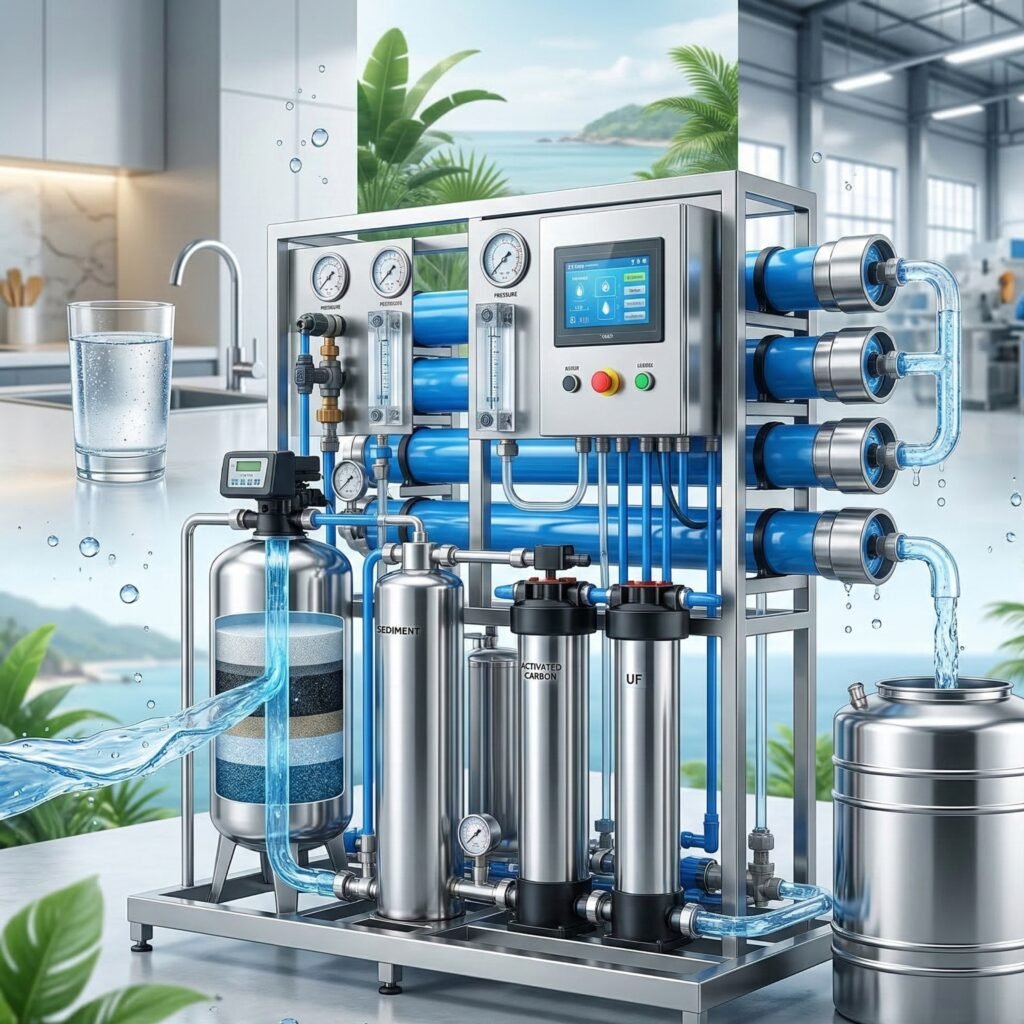
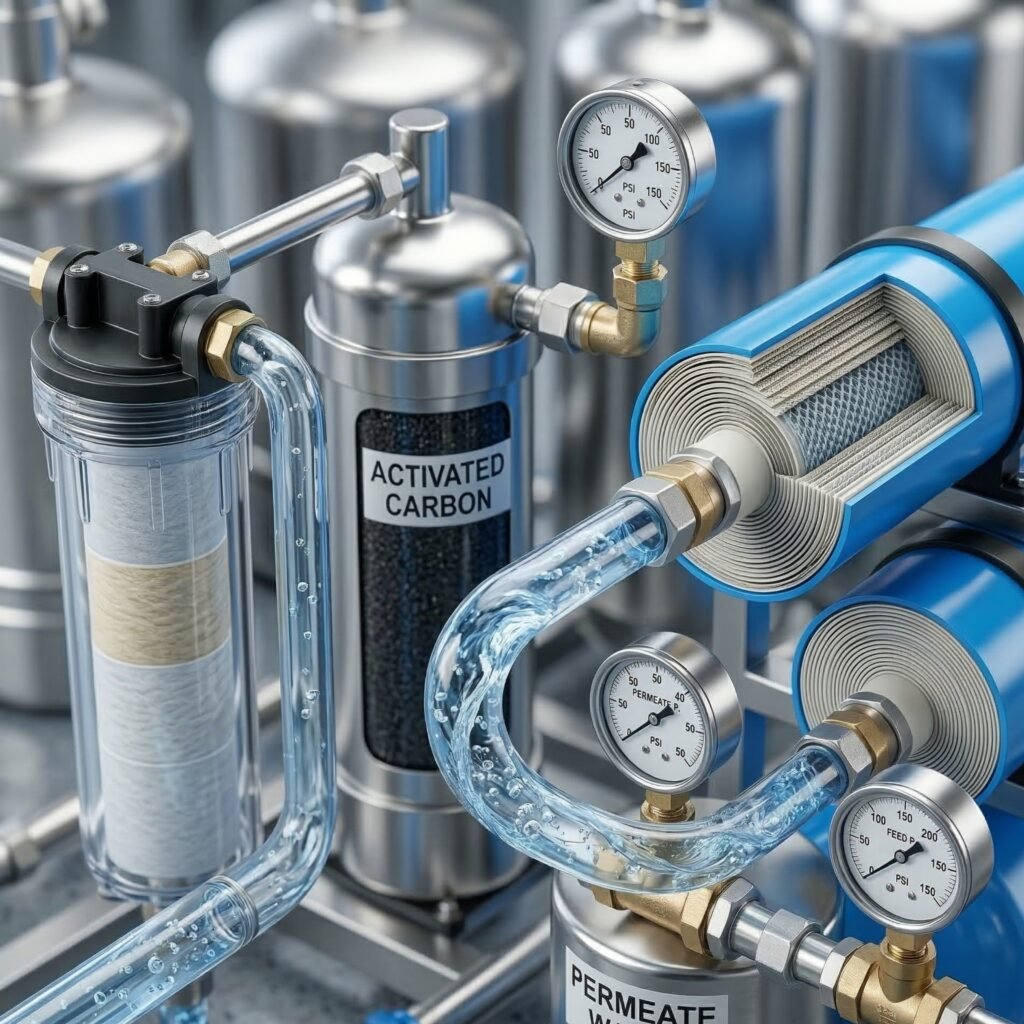
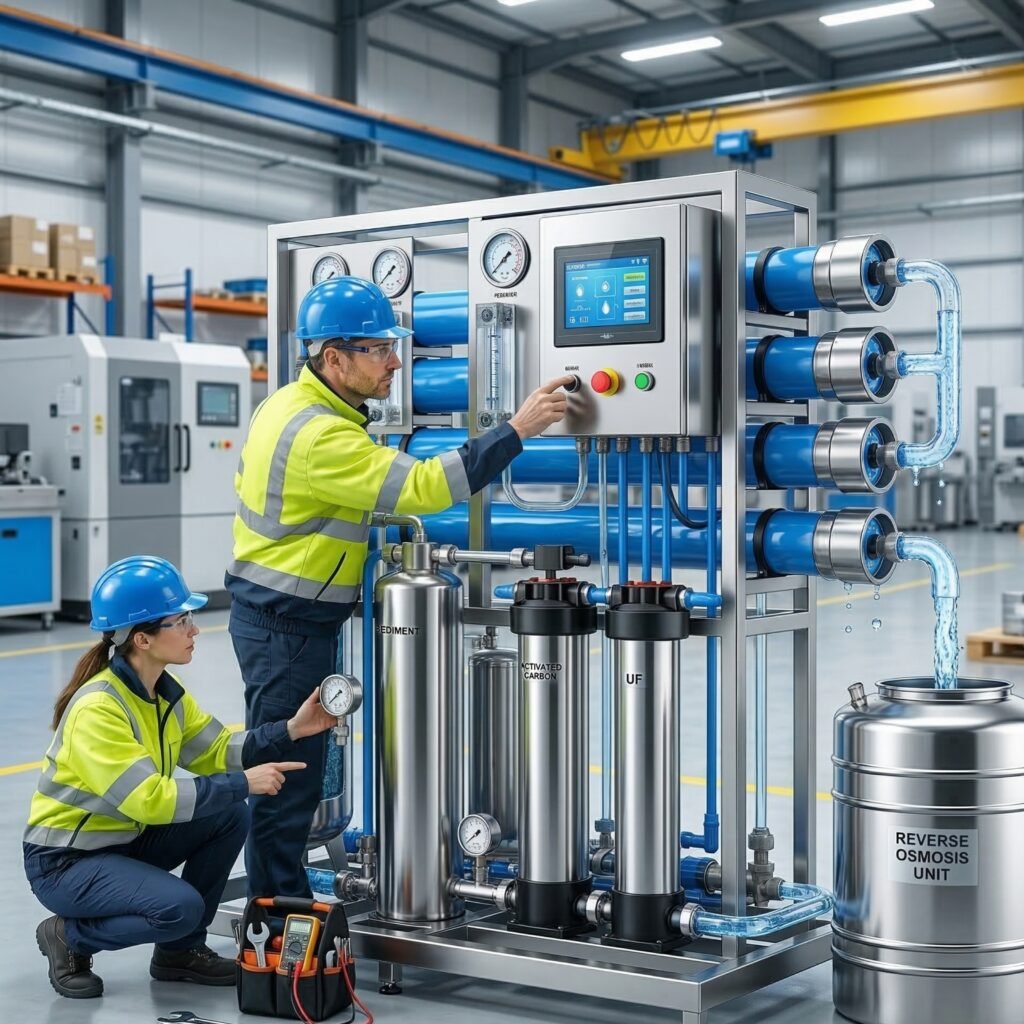
Reverse osmosis water purification system with activated carbon and pressure gauges

Industrial RO Plant Capacity and Pricing - Chikkaballapur 2026

Capacity

Application

Daily Output (indicative)

Indicative Cost

250-500 LPH

Small MSME, dyeing unit, hotel wing

2,000-5,000 L

₹85,000 – ₹1.6 lakh*

500-1,000 LPH

Medium factory, community plant

4,000-10,000 L

₹1.1 – ₹2.2 lakh*

1,000-2,000 LPH

IA shed, hospital, large campus

8,000-20,000 L

₹1.5 – ₹2.8 lakh*

2,000-4,000 LPH

Large Masthenahalli / Gowribidanur campus

16,000-40,000 L

₹2.2 – ₹3.5 lakh+*

Custom / 5,000+ LPH

Multi-line industrial campuses

As designed

On assessment

*Indicative bands aligned with Bangalore Aqua’s published industrial capacity pricing (Industrial RO Plant Manufacturer in Bangalore). Final quote after water test, automation, membrane brand and site readiness. AMC slabs: confirm before publish.

Chikkaballapur manufacturing packages include feed-water testing and commissioning verification. Where fluoride is in scope, permeate F checks are added to the commissioning pack.

Pre-Treatment Configuration for Chikkaballapur

For standard IA / urban borewells (hardness + TDS, F to be confirmed):
Multimedia sediment filter – Activated carbon filter – Industrial water softener (quality resin, Fleck or Clack class) and/or anti-scalant dosing – 5-micron and 1-micron polishing cartridges – Industrial RO plant – UV disinfection – SS storage

For fluoride-documented rural / taluk borewells:
Full standard train – RO with membrane selection aimed at high fluoride rejection (typically 90-96% class performance when healthy) – Enhanced UV as specified – Permeate fluoride verification at commissioning and on annual lab cycles where the project requires it – Kannada-friendly operator guidance for community plants

For CMC / scheme water:
Sediment – Carbon (chlorine) – Micron – RO – UV

For iron / turbid feeds:
Iron removal upstream – Multimedia – Carbon – Softener/antiscalant – Micron – RO

For community / CSR plants:
Robust pre-treatment – RO – Enhanced UV – Optional UPI/coin dispensing – Multi-year AMC – Pre/post water quality file for CSR reporting

Coverage: Chikkaballapur District and Adjacent Areas

Within Chikkaballapur district: Chikkaballapur city | Chikkaballapur IA | Masthenahalli | Gowribidanur / Gauribidanur | Bagepalli | Gudibande | Sidlaghatta | Chintamani
(as also listed on our Chikballapur supplier page)

Adjacent district coverage:
Bengaluru Rural – metro northern fringe
Kolar – eastern neighbour / shared fluoride-CSR context
Tumakuru – western approach

Manufacturing base: Yelahanka, Bengaluru – Our Presence

Our village bore shows fluoride above 1.5 mg/L. Will an industrial or community RO plant fix drinking water?

Yes – when designed for the measured feed. RO membranes reject the large majority of fluoride; softeners and UV do not. We confirm permeate quality at commissioning. For village CSR / community scopes, see Best CSR Project RO Plants

Direct manufacturer/assembler in Bengaluru with district-wide install and service – not a pass-through reseller markup chain.

Yes – industrial areas and surrounding taluk towns listed above.

No. Softener addresses hardness scale; it does not remove fluoride. Typical design is softener/antiscalant plus RO, with permeate F verification when lab confirms fluoride risk.

Many MSMEs: 500-2,000 LPH; larger campuses: 2,000-4,000+ LPH. We size from peak hourly demand.

About 2-5 working days for standard industrial skids after site readiness; longer for custom civil-heavy jobs.

Often yes, after inspection – filters, membranes, cleaning and breakdown support.

Call or WhatsApp +91 76763 93939 / +91 97387 04753 with taluk, water source and peak LPH need.

Reverse osmosis water purification system with activated carbon and pressure gauges

Book Your Free Chikkaballapur Site Assessment